Sharpening the Pencil: Why Ving Tsun is the Perfect Martial Art for Seniors
Finding the Fountain of Youth in the Kwoon: Why It’s Never Too Late for Wing Chun
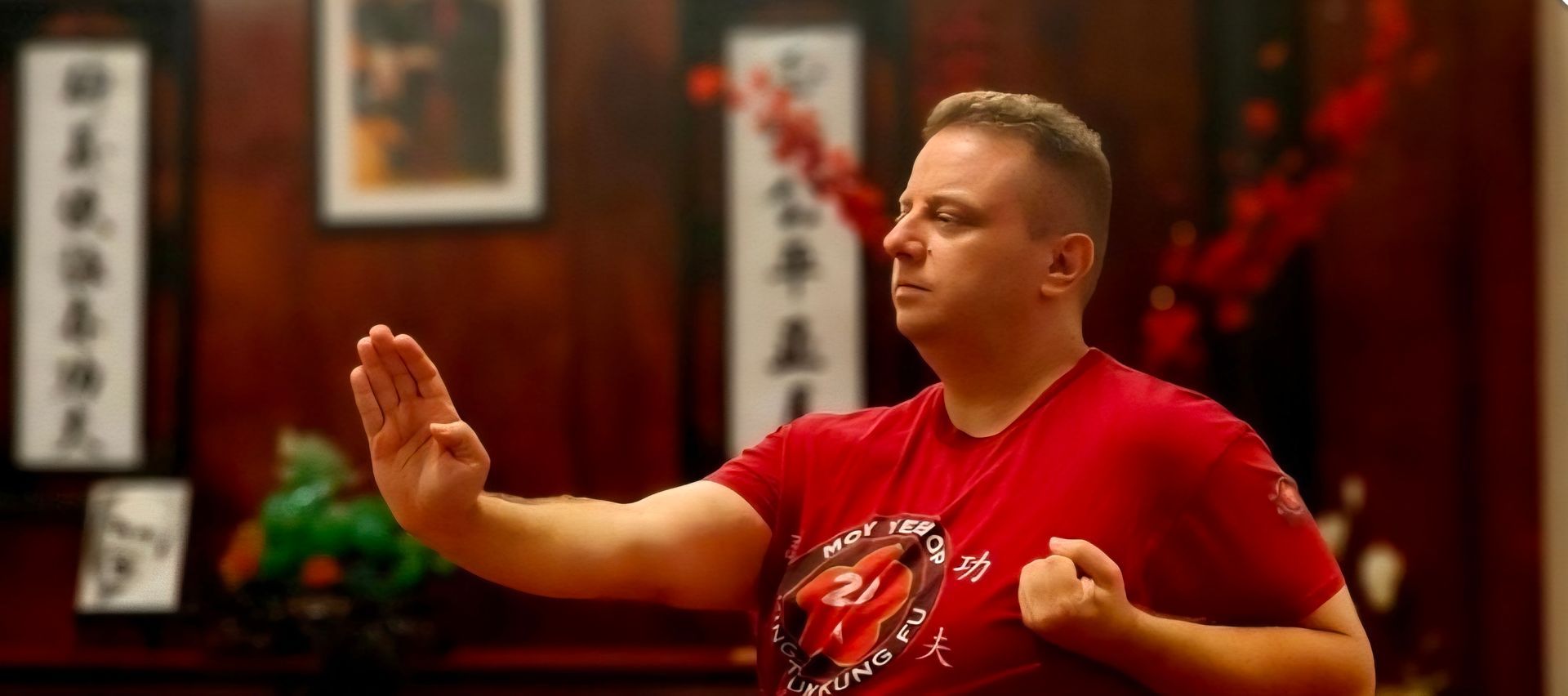
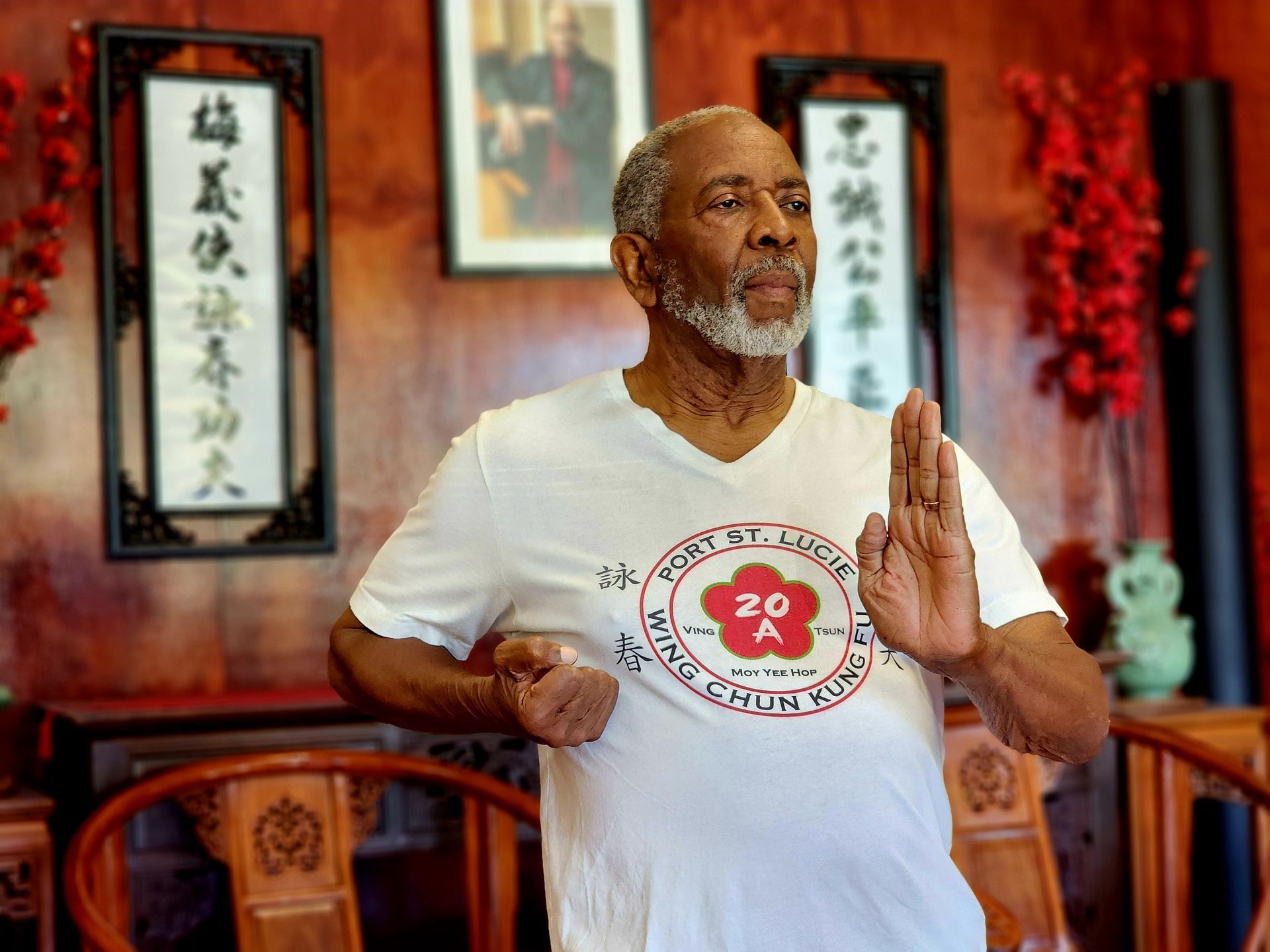
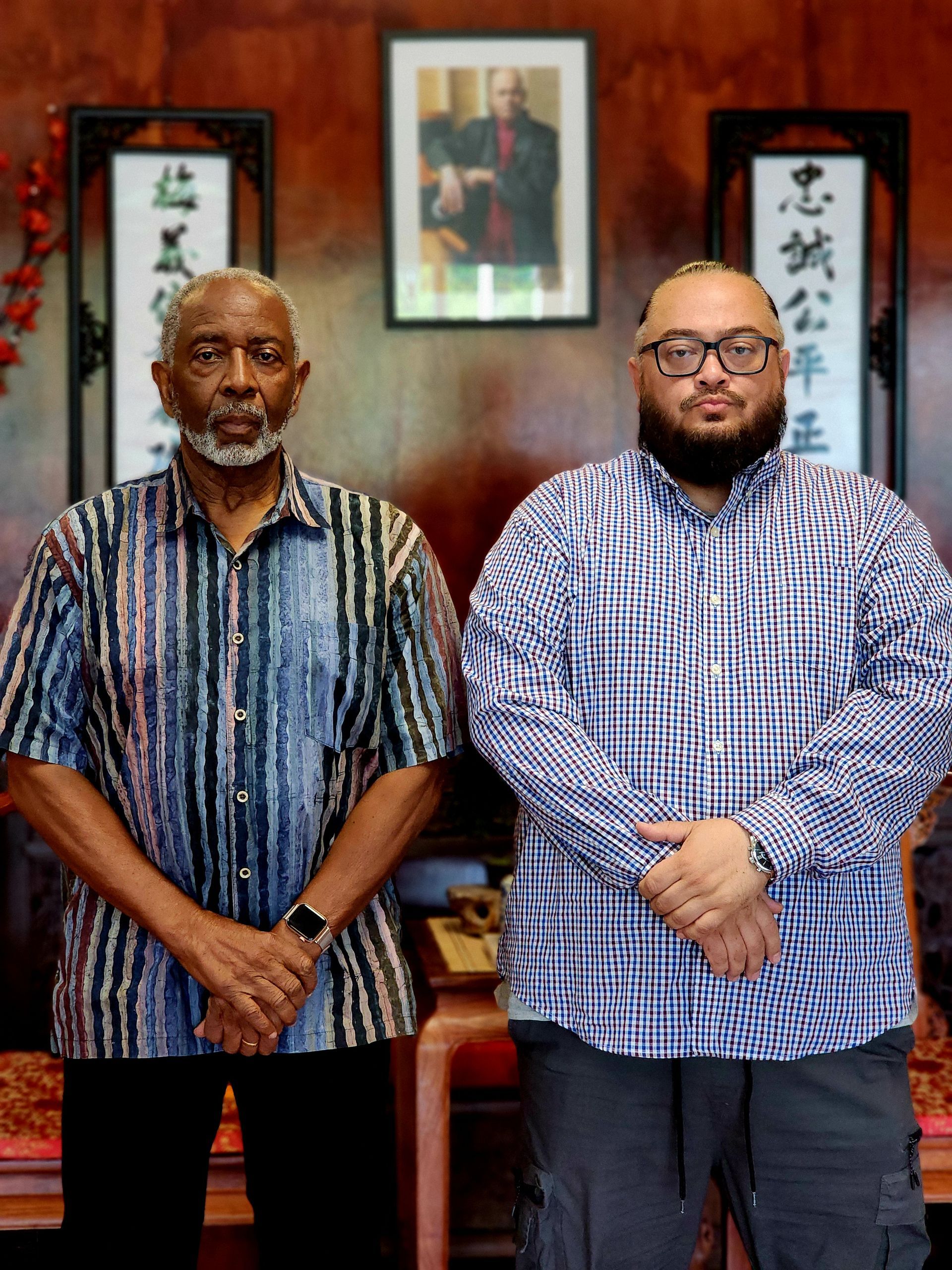
Many people view martial arts as a young person’s game—a world of high-flying kicks and intense impact reserved for those in their twenties. However, at Moy Yee Hop Ving Tsun Kung Fu, we believe that Kung Fu is a lifelong journey that actually becomes more valuable as we age. Ving Tsun (Wing Chun) isn't about brute strength; it’s about efficiency, structure, and mental clarity. For seniors, it offers a unique path to physical rejuvenation, improved balance, and a vibrant social community. To illustrate this, we sat down with Greg, a dedicated student who began his Wing Chun journey at age 74, to discuss how this traditional art has transformed his approach to health and longevity.
"Wing Chun is very simple in its conception and implementation. I can still participate and feel good about the quality of my outcomes."
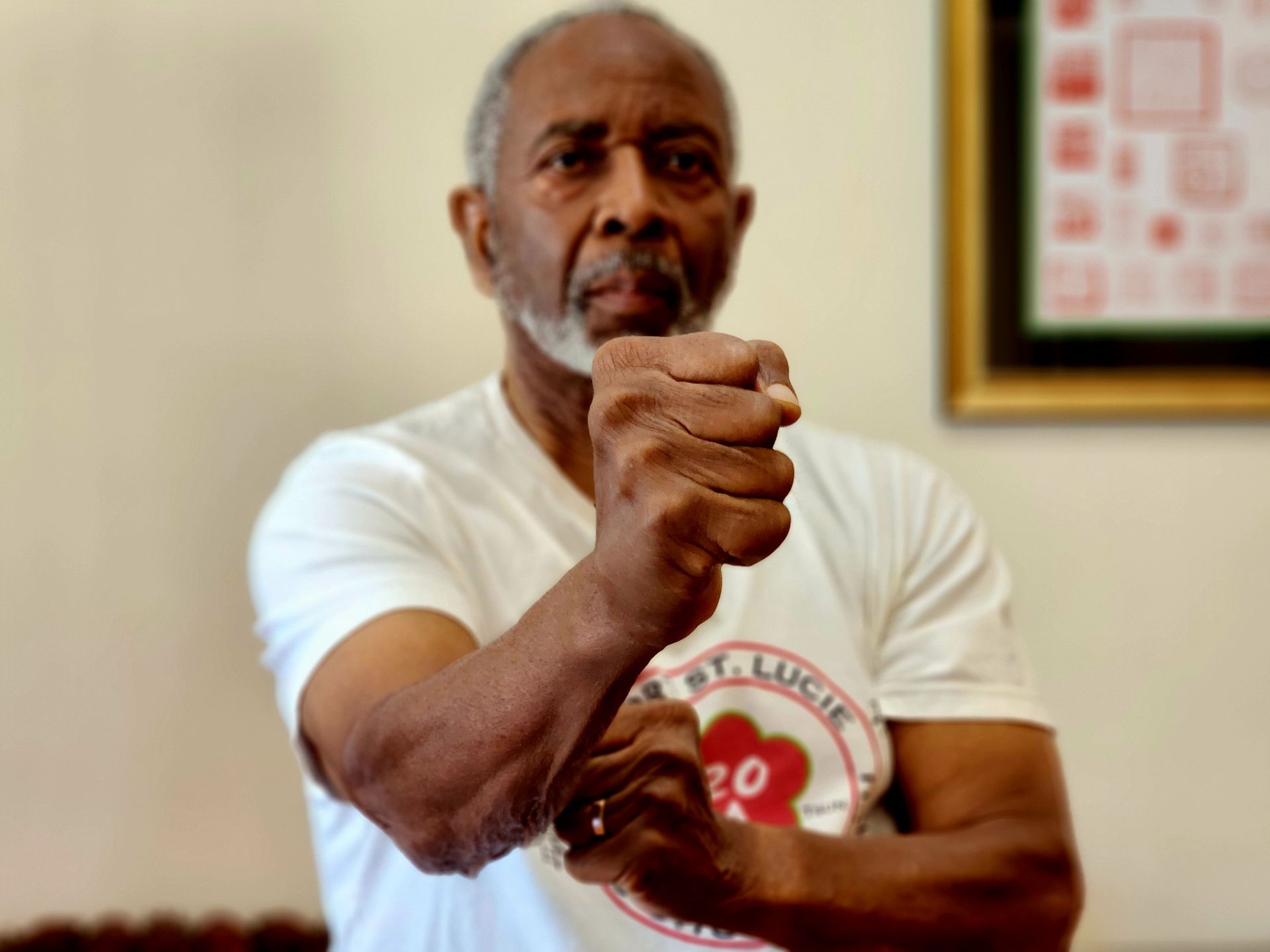
A Conversation with Greg: Ving Tsun at 70+
Greg, many people think of martial arts as something only for the young. What inspired you to start training Ving Tsun Kung Fu at this stage of your life?
I’m not a neophyte when it comes to martial arts. Starting with Kenpo Karate in my early ‘20s, Tai Kwon Do in my ‘30s, Lu Hop Ba Fa in my ‘40s , Aikido in my late ‘40s, Tai Chi in my ‘50s and Wing Chun in my ‘70s. I have many friends who have studied martial arts over the years. Most of them probably in the high 90% are no longer practicing. Why? In my opinion, many martial arts tend to be high impact arts. Especially for novices. “Bone on bone”, “smashing strikes” and “disabling kicks” can be detrimental to your physical health. As the body ages it takes more time to recover from injuries and bruises. The longer it takes to recover the less you practice. So, by the time you return, you feel like you’re starting over. There is also the intellectual emotional issue. Am I bored after a few months? Am I learning something new and exciting, or is it the same old rigamarole? Another way of putting it: “What’s keeping me here?”
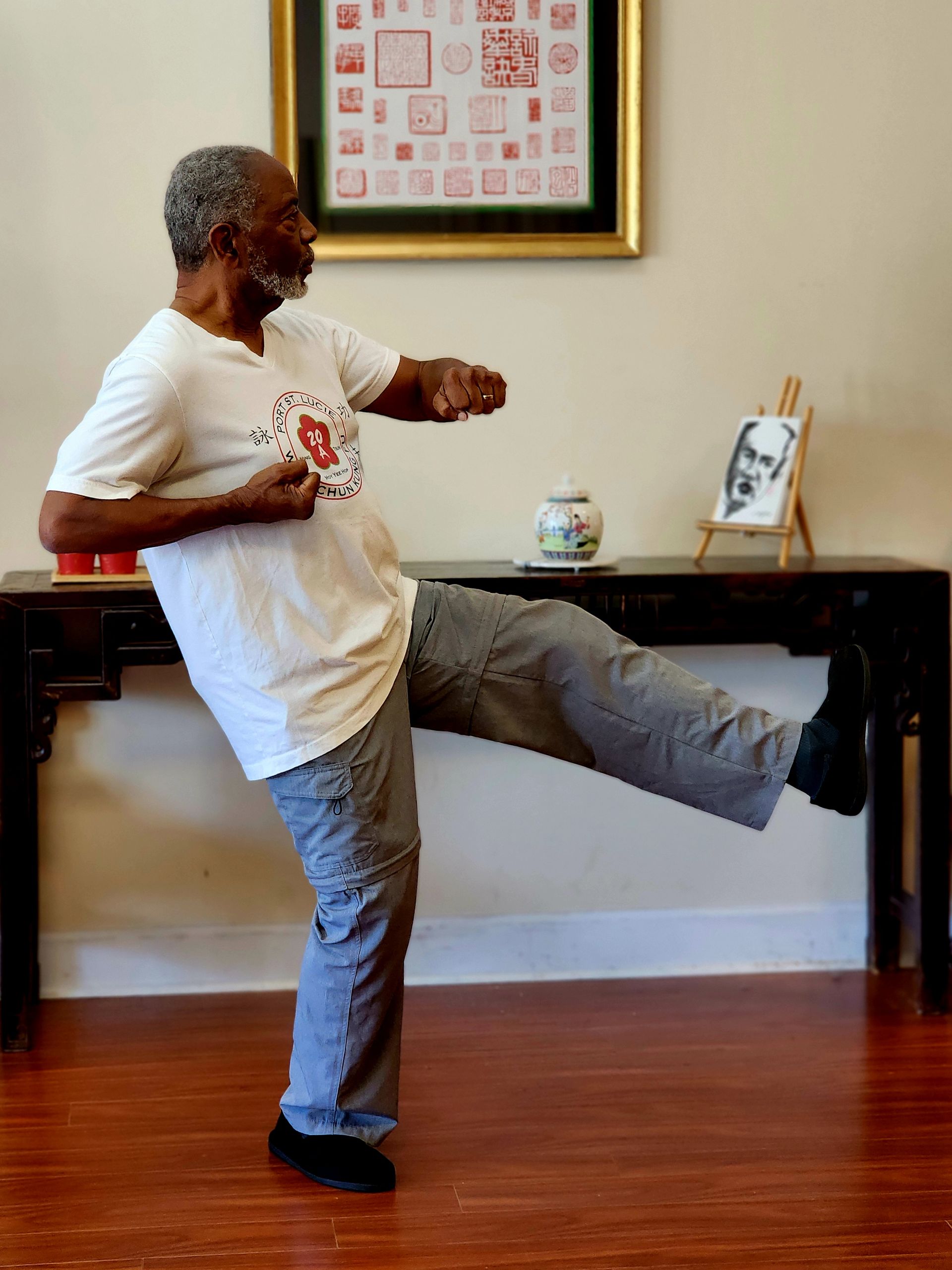
Before you walked through the doors of the Kwoon, did you have any hesitations or misconceptions about Kung Fu? How did those change after your first few classes?
Many examples of Kung Fu in the media show it as a flashy style. That’s fine for a young man, but not ideal for a man in his ‘70s. Wing Chun is very simple in its conception and implementation. In other words, I can still participate and feel good about the quality of my outcomes. In just a few lessons you can learn a skill and practice it 60-70 times per class with a diverse number of students who are at different levels of proficiency. First you learn from Sifu James, then practice with numerous students who are more skilled than you. Great! It works, I’ll keep coming to class.
"Wing Chun stimulates the mind by teaching the why, how and when to use your own movement to create a change within your training partner."
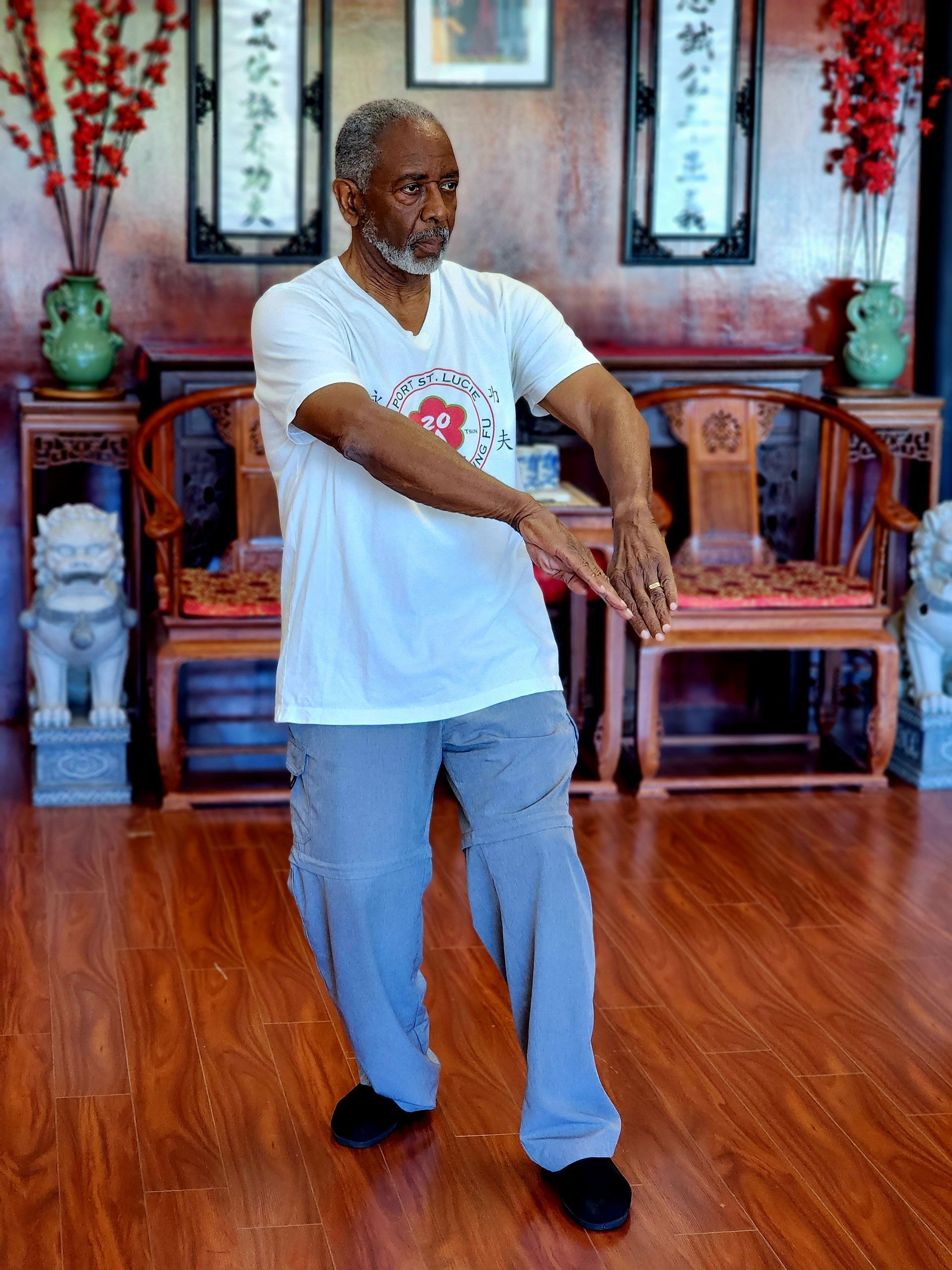
Since starting Ving Tsun, what specific physical changes have you noticed in your daily life? (e.g., balance, flexibility, energy levels, or ease of movement).
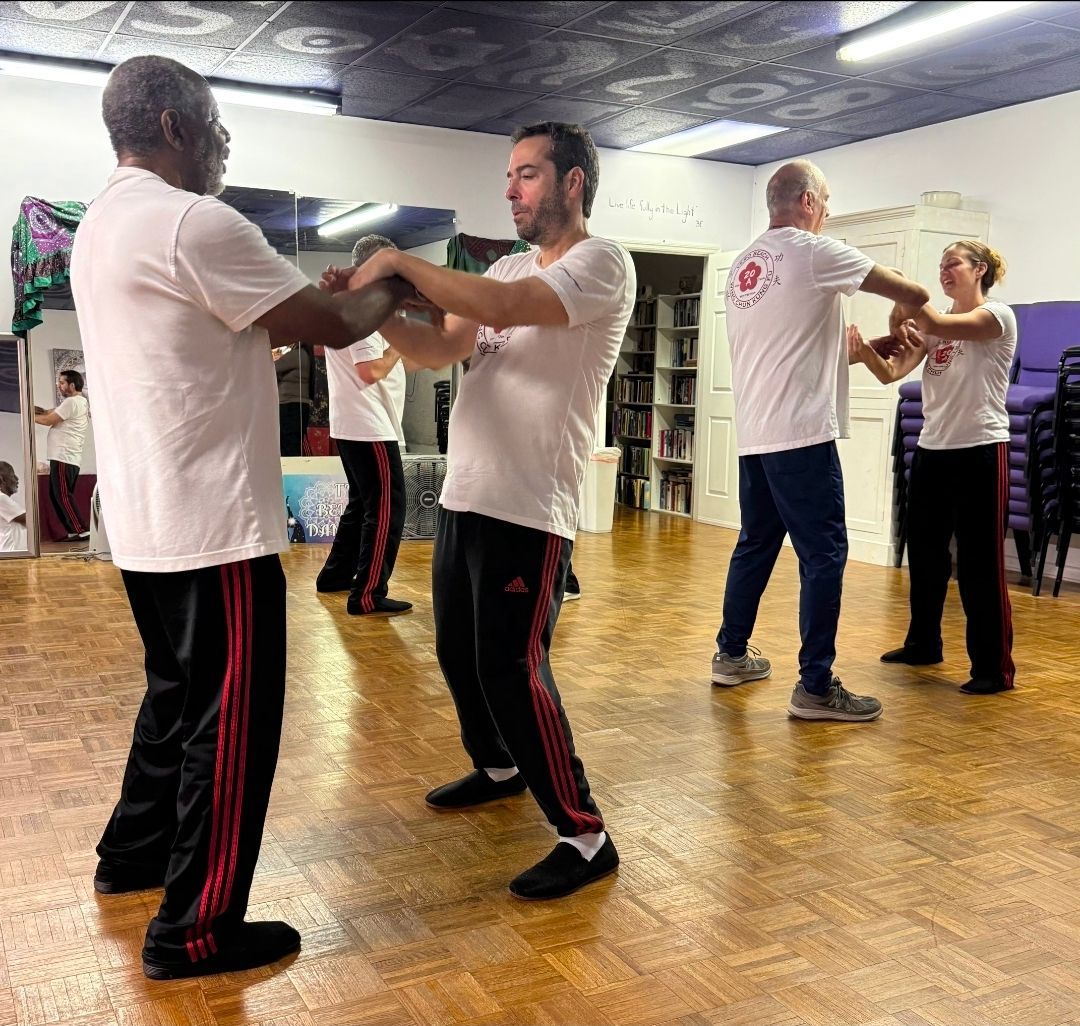
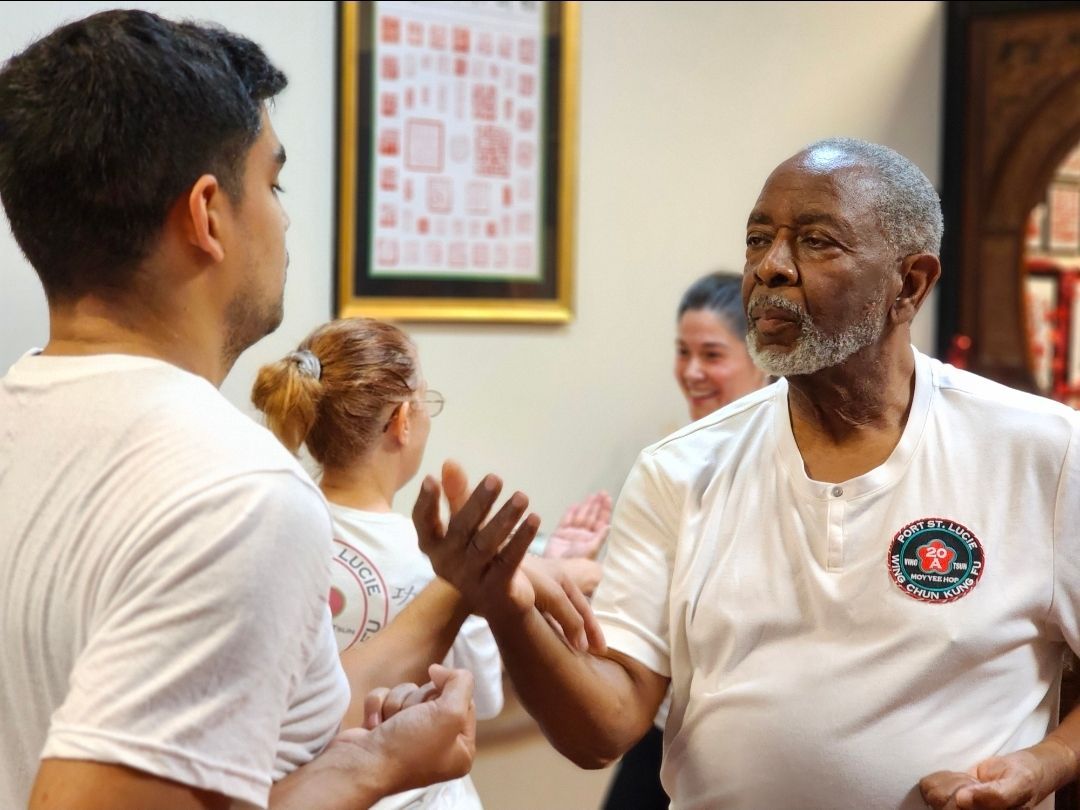
I started practicing Wing Chun consistently at the age of 74. I came from another low impact martial art, Tai Chi. Both have similar benefits: improved fitness, flexibility, balance and general well-being. However, with Wing Chun, my mind was further stimulated by the intricacies of this center-line focused martial art. Wing Chun stimulates the mind by teaching the why, how and when to use your own movement to create a change within your training partner. The simplicity of movement is not difficult to learn, the joy lies in the implementation of that movement to control, subdue and influence your training partner. Some other arts have similar processes especially in learning forms which are the practiced movements you learn in a sequence (kind of like a dance routine). Some are taught in slower motion. But that’s where many of them stop, especially for seniors. In Wing Chun, the body benefits from doing the movements. The mind benefits from knowing why you are doing the movements. Practicing the movements with a training partner identifies their effectiveness. So physically I’m exercising, mentally I’m engaged and socially I’ve joined an interactive group of active, curious individuals who are working hard and having fun. In 6 months this year I have lost 17 lbs. Partly because I can train in class at least 3 times a week and I practice at home. Everybody’s different, so I’m not suggesting that your experience will be the same, however the fact that I’m not getting injured while practicing is based on how the system is taught.
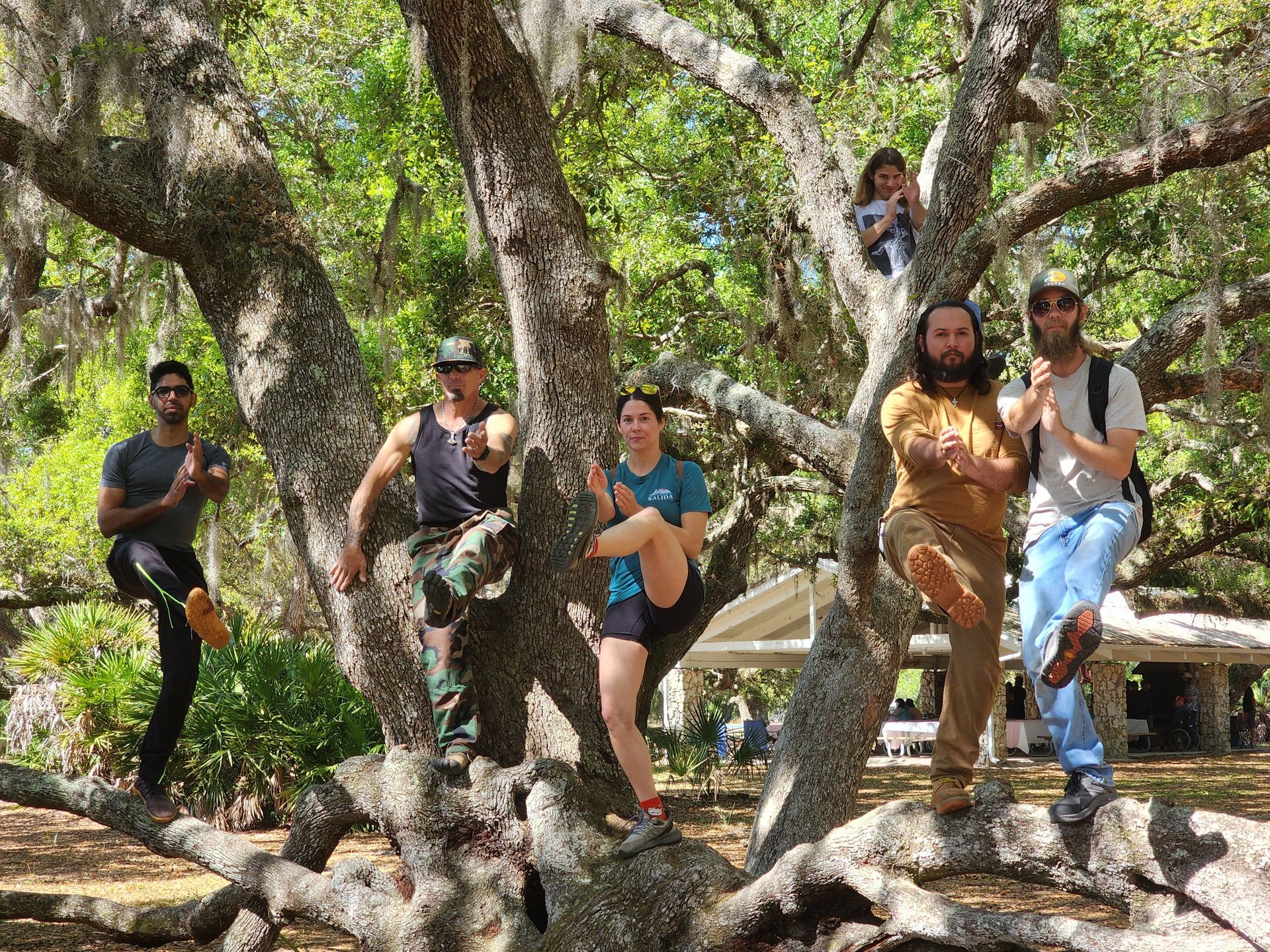
- Balance is improved because we practice balance exercises on one and two legs.
- Strength is increased by pushing on your partners for 45 min. to an hour during class.
- Flexibility and cardiovascular health improve by practicing the forms. I, like many students, stay and practice and extra 30 or so minutes after class.
Wing Chun helps me with rejuvenation. Some days I may be tired after working or doing chores and just feel like crashing in a soft chair which means probably eating something sweet or salty which I know I shouldn’t do. So, I will convince myself to go to a Wing Chun class instead. The true benefits of this decision don’t usually come during class, instead, it’s an after class effect of euphoria. For some reason I just feel better and my mood is pleasantly elevated. I’m sure it comes from the training and the camaraderie of fellow students who exchange ideas and enjoy the work of mastering the art. I enjoy practicing Wing Chun.
"Some days I may feel like crashing in a soft chair... I will convince myself to go to a Wing Chun class instead. The true benefit is an after-class effect of euphoria."
In our lineage, we focus a lot on relaxation rather than brute strength. How has learning to "relax" in training helped you manage physical stress or aches outside of class?
As a new student, it’s not likely you will be learning how to relax. Your focus is on learning the forms, techniques and methods of interaction with your peers. But, relaxation does come up in conversations with Sifu James and upper level students. Before you can relax you have to be able to depend on your skills to be in the right place, at the right time, physically. Due to the repetitive nature of practicing a form or technique, you begin to understand the pressure that your training partner is applying to your body. Hopefully, your mind starts to solve the problem of how to sustain structure with less pressure. You begin to listen to how your partner applies pressure; what angle, what speed, what structure. By following your partner, you learn how to relax within the structure of the form. You become “softer.” Understanding the physics of your body (including your breathing) and your partner’s body allows you to relax and “play” (interact) at a higher level, which is rewarding to your self-identity. Feeling good about one’s self is another attribute of Wing Chun.
How does practicing the forms (like Siu Nim Tao) fit into your morning or daily routine to keep you feeling active?
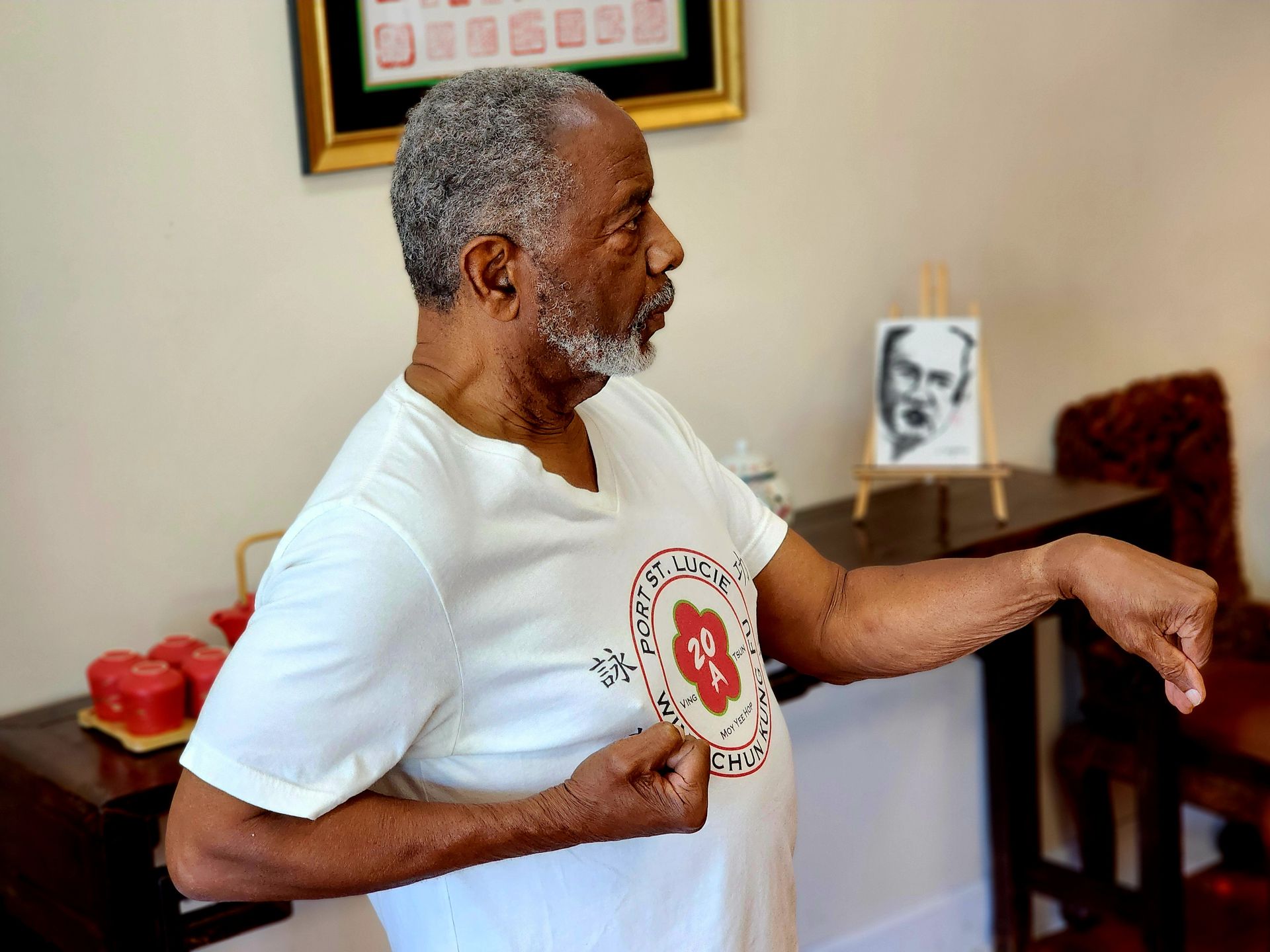
The evening after class I usually reflect on what I’ve learned and how it fits into the form as I drift off to sleep. When I wake up in the morning my mind returns to what I was reviewing the night before. I enjoy going out in the morning and practicing the forms after I’ve warmed up. I start slow due to the creaks and groans of elderly early morning body. I work out on the forms and some techniques for about an hour three to four days a week. I start with Siu Nim Tao, then Chum Kim and finally Biu Jee. Sometimes I reverse the order or work on a particular movement for an extended amount of time to improve my understanding or increase my flexibility. Understanding how the techniques are reflected in the form is not always obvious. Eventually, I try to accelerate the movements and focus on relaxing while keeping the structure. It’s a good time for introspection.
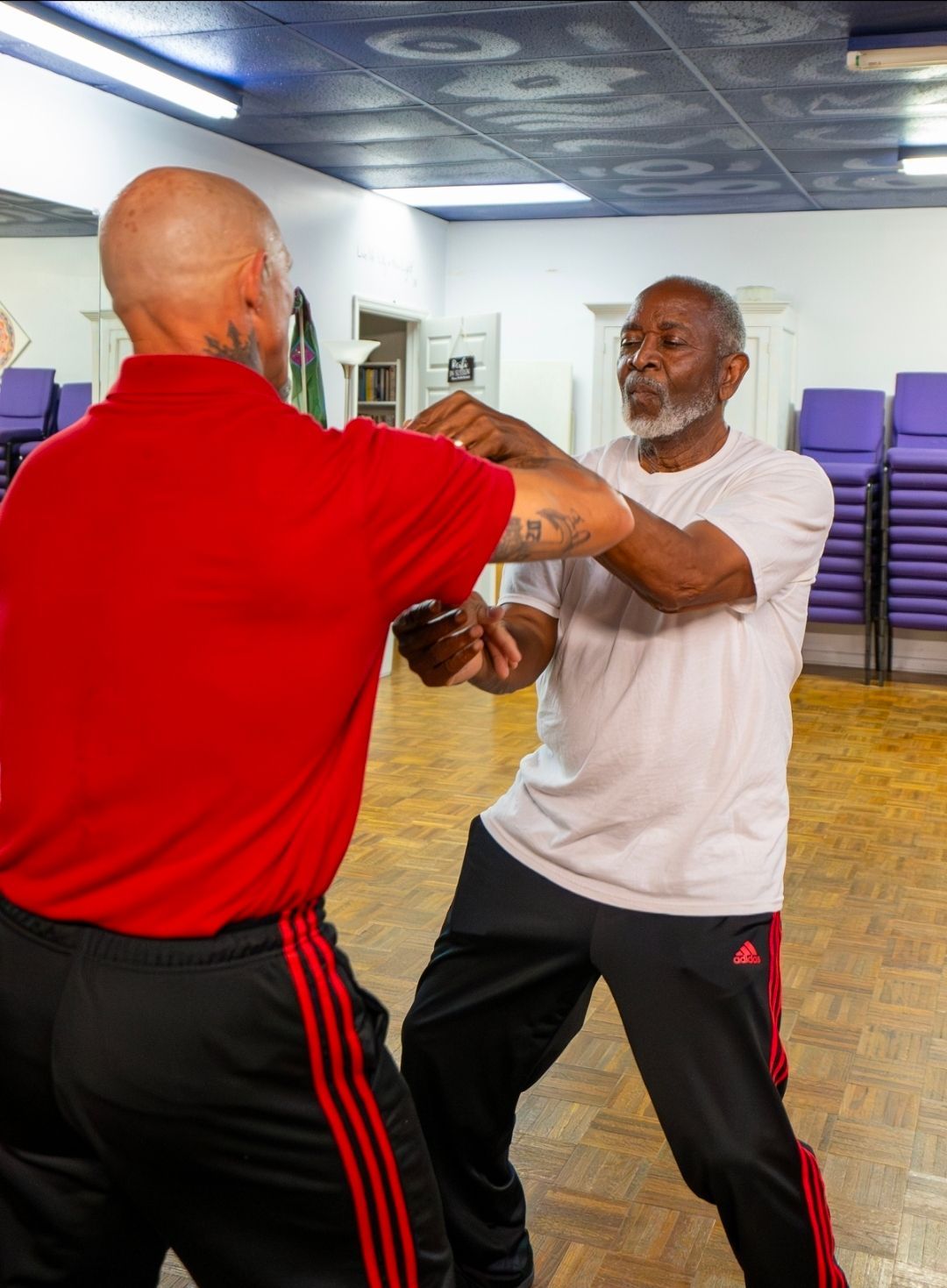
Ving Tsun requires a lot of mental presence. Do you find that the focus you use in class carries over into your hobbies or work?
I have interest in computer art, drones and 3D modeling. I’ve found that I don’t have the attention span I had 20 years ago, however, I have the stick-to-it ness that allows me to return to the activities after short breaks, sometimes long breaks. My focus returns and I can continue learning. I feel that sustained focus mirrors the activities I practice in Wing Chun.
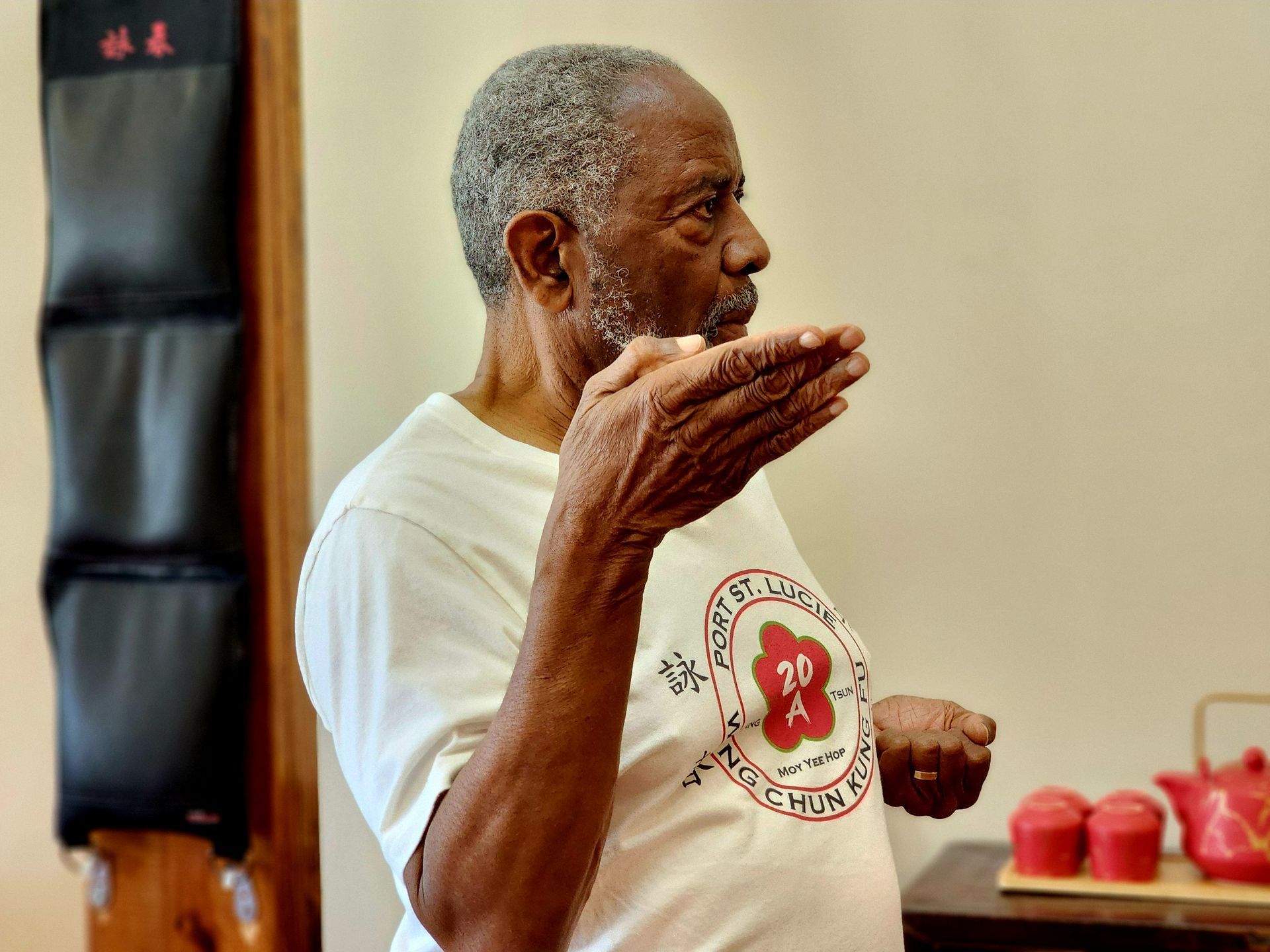
The Kwoon's website mentions the "Kung Fu Family." How important has the social and community aspect of the school been for your overall happiness and motivation?
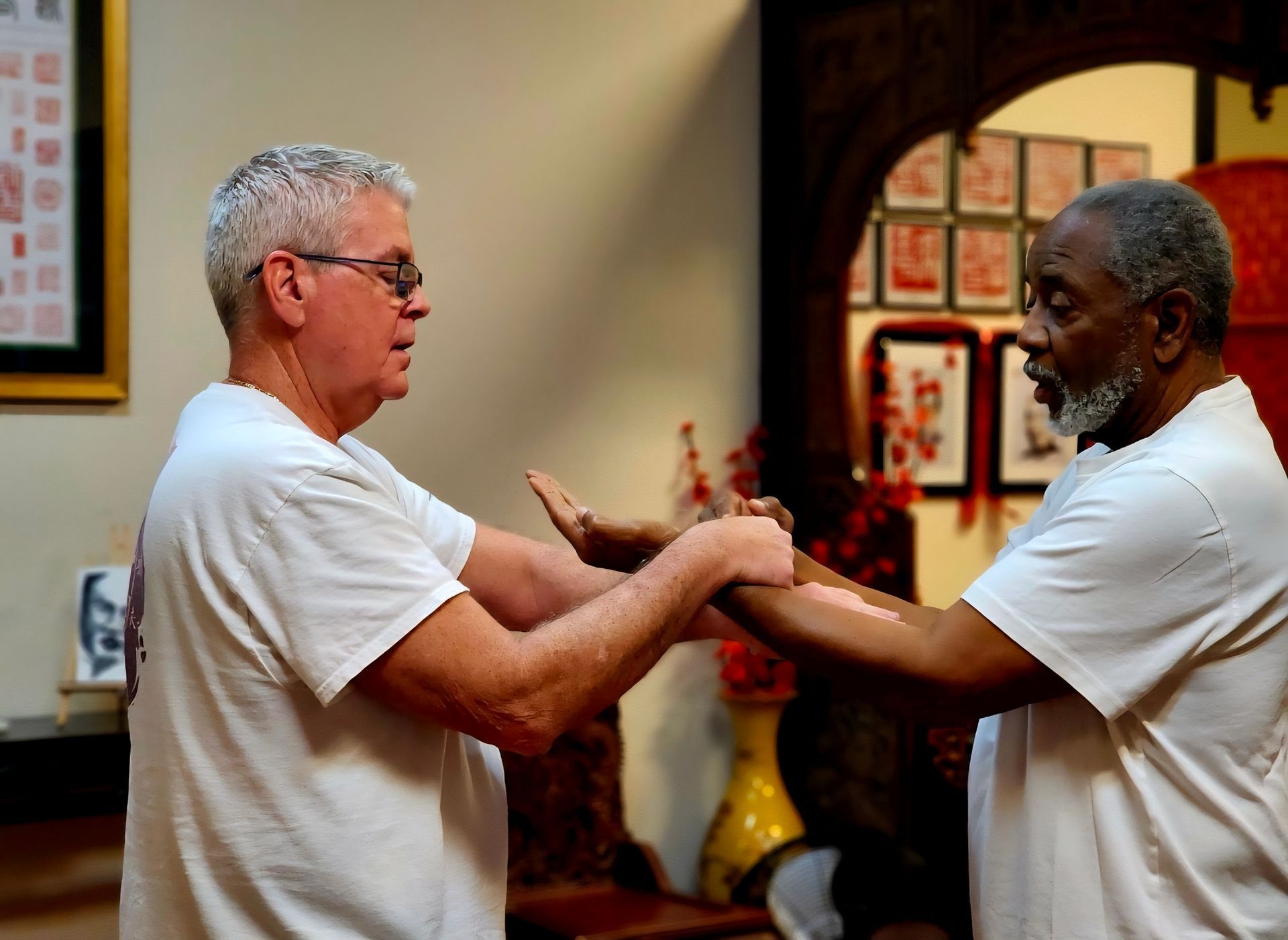
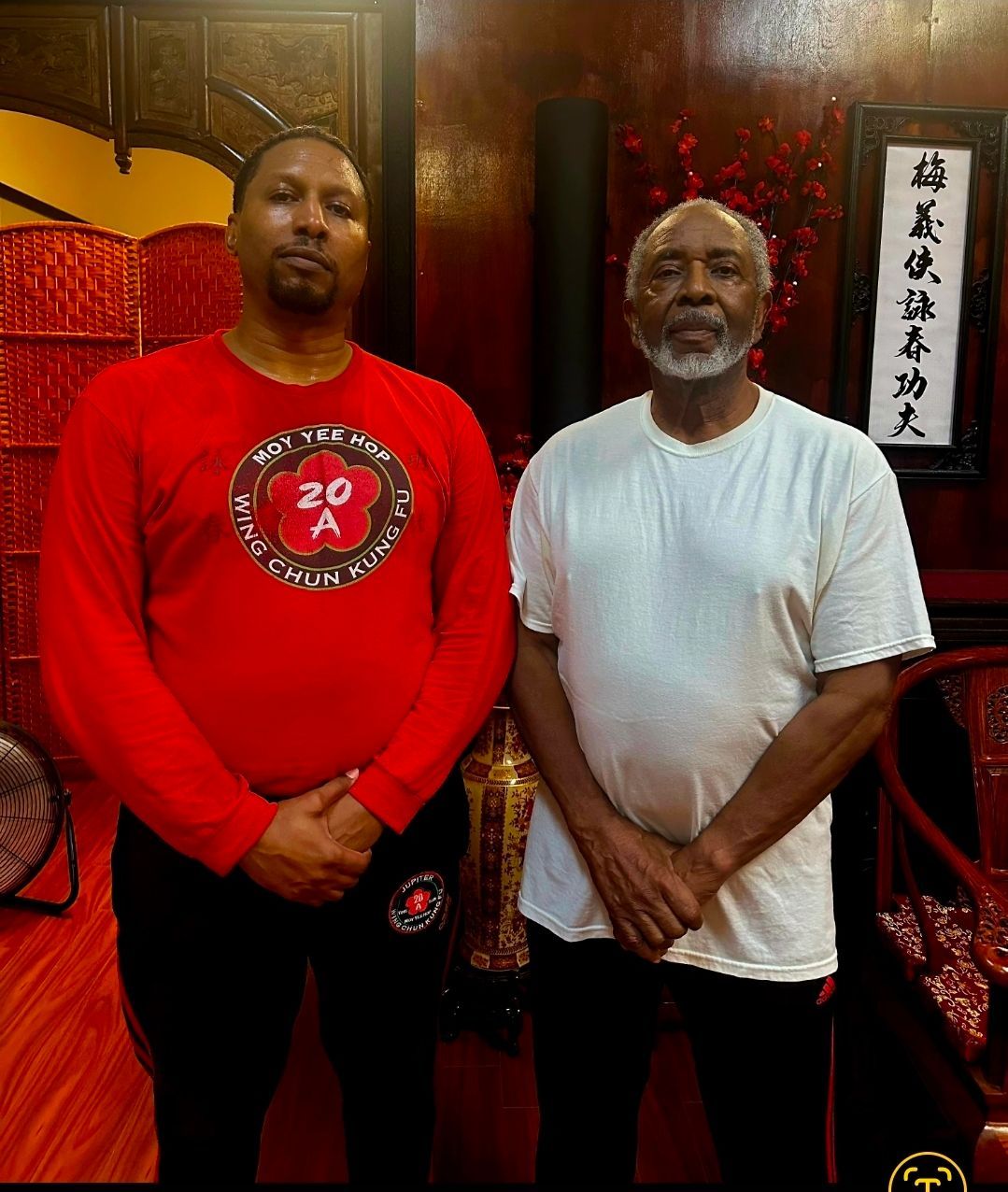
Class structure is an important attribute of Wing Chun. You have a head instructor titled as (Sifu). Sifu James structures the class and the lessons that are pertinent to what the students should be learning. He is also the head cheerleader or coach. The Sifu keeps the ball rolling and the train on the tracks. His skills like any successful instructor are impactful and lead you in the right direction.
Let’s say there are 10 people in a class who all may be working on similar or different techniques adapted from the forms. You get to interact with each individual by exchanging partners every 6 - 7 minutes. Some are tall, some short, some lightweight, some heavier, and many on different levels of skill. Can you learn from all of them?
Of course you can. Wing Chun is a time of discovery for the body and mind that you share with your classmates. Everyone greets you when you arrive or when you leave. People comment on your progress and help with your understanding and you are constantly challenged in a supportive way to succeed. And when you succeed, you are complemented by your peers with smiles, claps and high-fives or positive retorts, i.e. “good job”, ”I see you”, “keep it going”, etc.
"Physically I’m exercising, mentally I’m engaged, and socially I’ve joined an interactive group of active, curious individuals who are working hard and having fun."
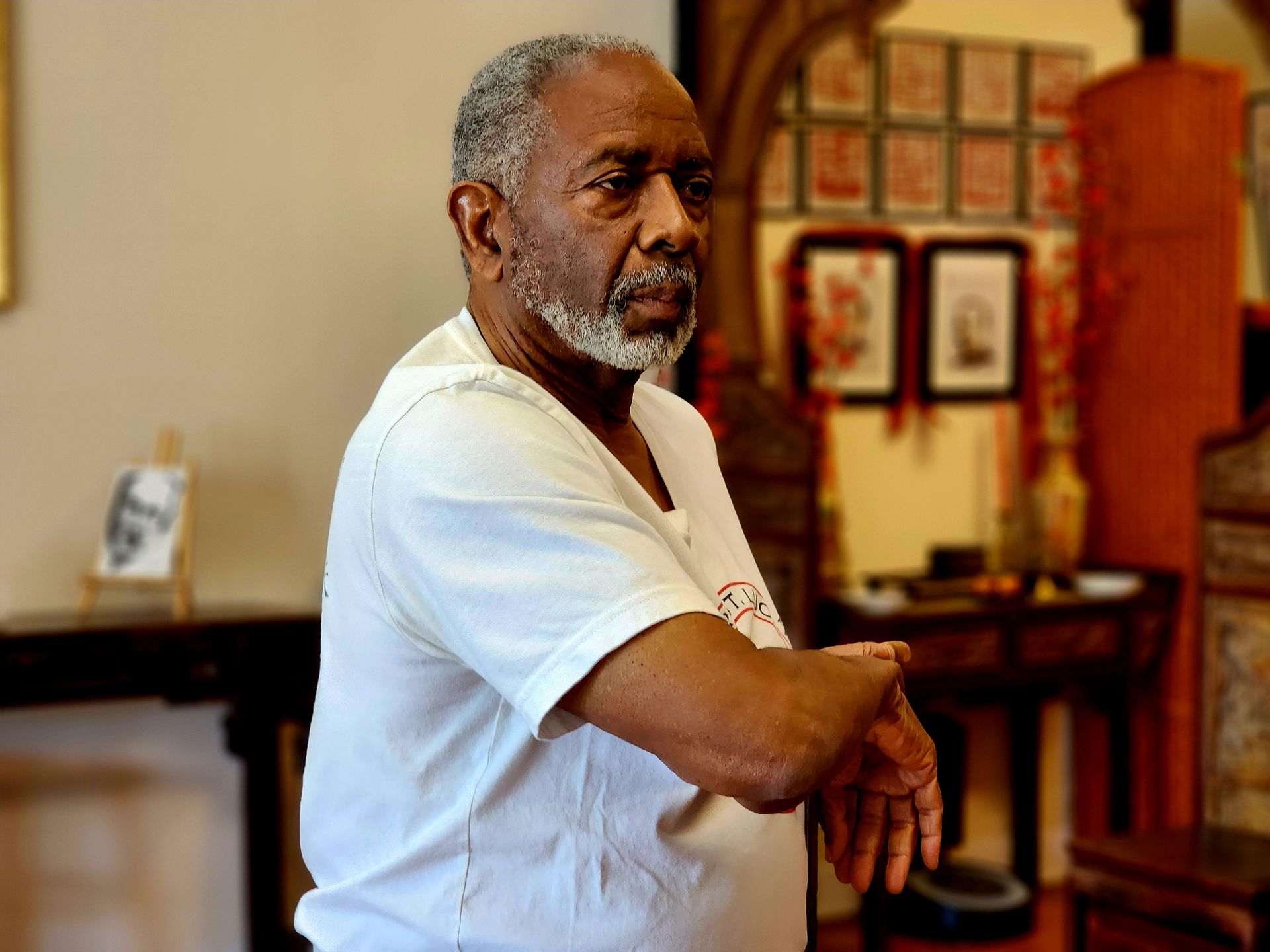
We often talk about the "Centerline" in Ving Tsun. Have you found yourself applying that concept of balance or focus to your personal life or decision-making?
I see centerline theory as an extension of Ying and Yang. If you separate the body vertically left and right while one side is pushing or going forward the other side is reacting by pulling or reversing. One side is harder while the other side is softer. It’s an extension of nature i.e. one foot of the ground while the other is able to float by in the air, as in, walking. Now for me it gets highly focused when you try to maintain your structure so that you protect your centerline. It is so easy to drift away from the centerline. It is not a natural position and takes continual training. Forget mastering it, I just try to improve a little at a time. But that’s the joy of training, you’re not chopping down a tree, you’re sharpening a pencil. Pencils get dull after time and need to be sharpened again. Any time your training partner gets in with a swipe or tap reminds you how much you don’t know about centerline. Simple but hard. In life it’s like returning to the task until you accomplish it. Centerline is a concept, a theory and idea that you practice without ever mastering. So much in life is that way; family, work, recreation and friendships. Can you maintain balance within structure? Do your decisions in life reflect your position?
"My mind was further stimulated by the intricacies of this center-line focused martial art."
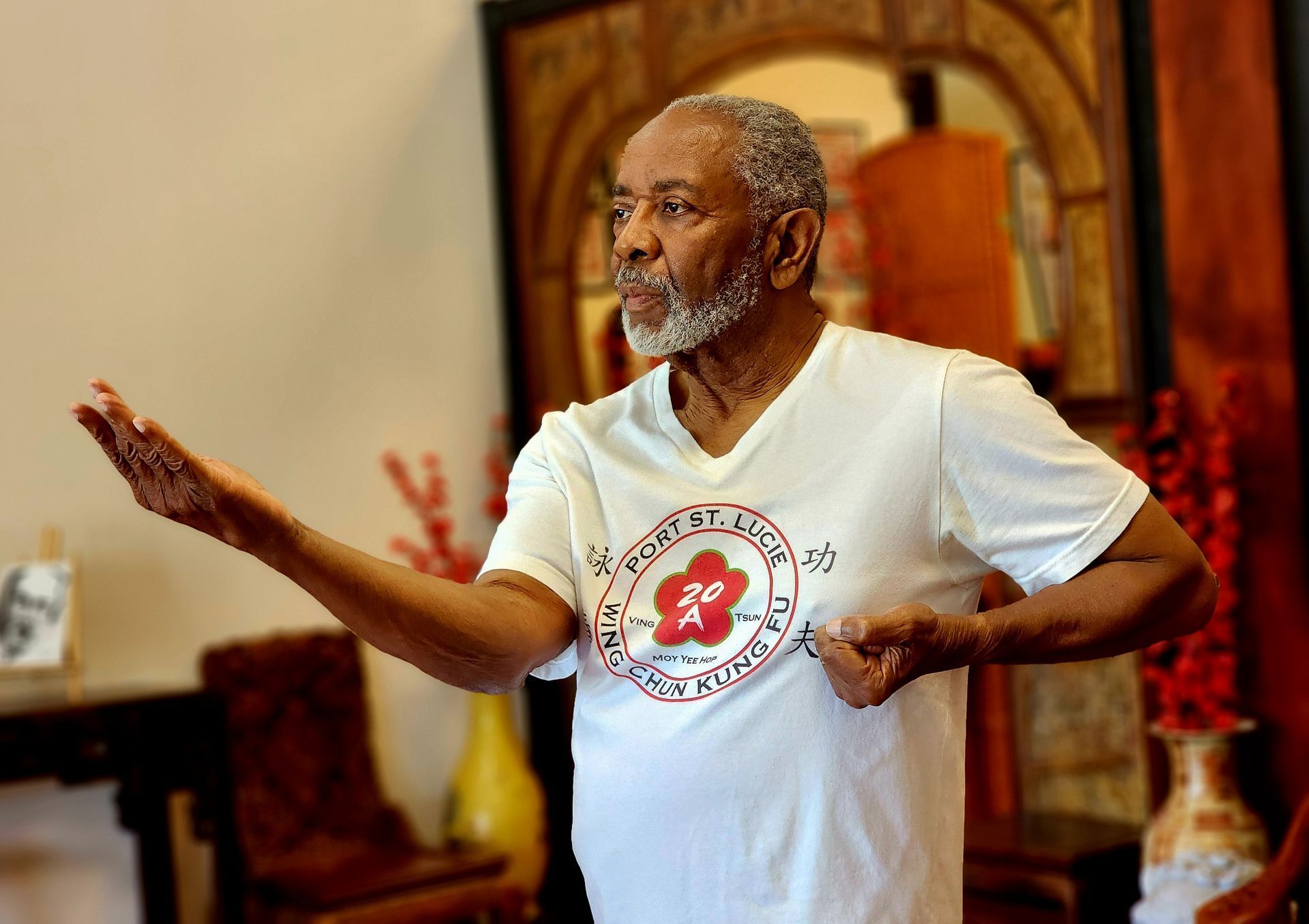
Our school often says, "You will age faster if you do not practice." What does that quote mean to you personally?
It means, listen to your body. When you don’t practice or are injured, how do you feel? I feel tension in my muscles. I feel unnatural stiffness in my joints, I feel shortness of breath or dizziness while rising. I’m not saying I don’t feel these things when I train, I’m saying they occur less often or with less intensity. Ageing is ageing, you can’t beat it, you can’t defeat it, but you can meet it and delay it. Oh, and that gives you a feeling of well-being. I enjoy the art and I hope I’m an inspiration to those I partner with.
"Ageing is ageing—you can’t beat it, you can’t defeat it, but you can meet it and delay it."
What would you say to another senior who is sitting on the fence, wondering if they are "too old" or "not fit enough" to start training at Moy Yee Hop Ving Tsun?
See me, feel me, watch me, be me. Does it look like I’m having fun? Does it look like I care about my partners and they care about me? Do I practice what I preach? Get up and try it and if you can’t get up, we can practice sitting down. Let’s do it together. This is a team effort. We can all help each other.
What is one goal you have for your Kung Fu practice over the next year?
I would like to learn the Jong and to whittle away at learning how to relax during practice.
Do you feel a sense of pride in learning an "authentic, classical system" rather than a modern sport?
I have only studied classical systems. I don’t have an opinion about other arts as I am not interested in them. I have not looked into them deeply other than watching a match on TV. What I know about classical systems is that they evolved from trial and error. What is practiced is what has been worked on for centuries. The ideas are old and persist because they have proven to be effective. We don’t hear about all the martial arts that didn’t survive but I’m sure there were many of them. I know by using a system like Moy Yee Hop lineage I can continue to learn and evolve my skills for the rest of my life. What could be more rewarding?
"I know by using a system like the Moy Yee Hop lineage, I can continue to learn and evolve my skills for the rest of my life. What could be more rewarding?"
Start Your Kung Fu Journey Today
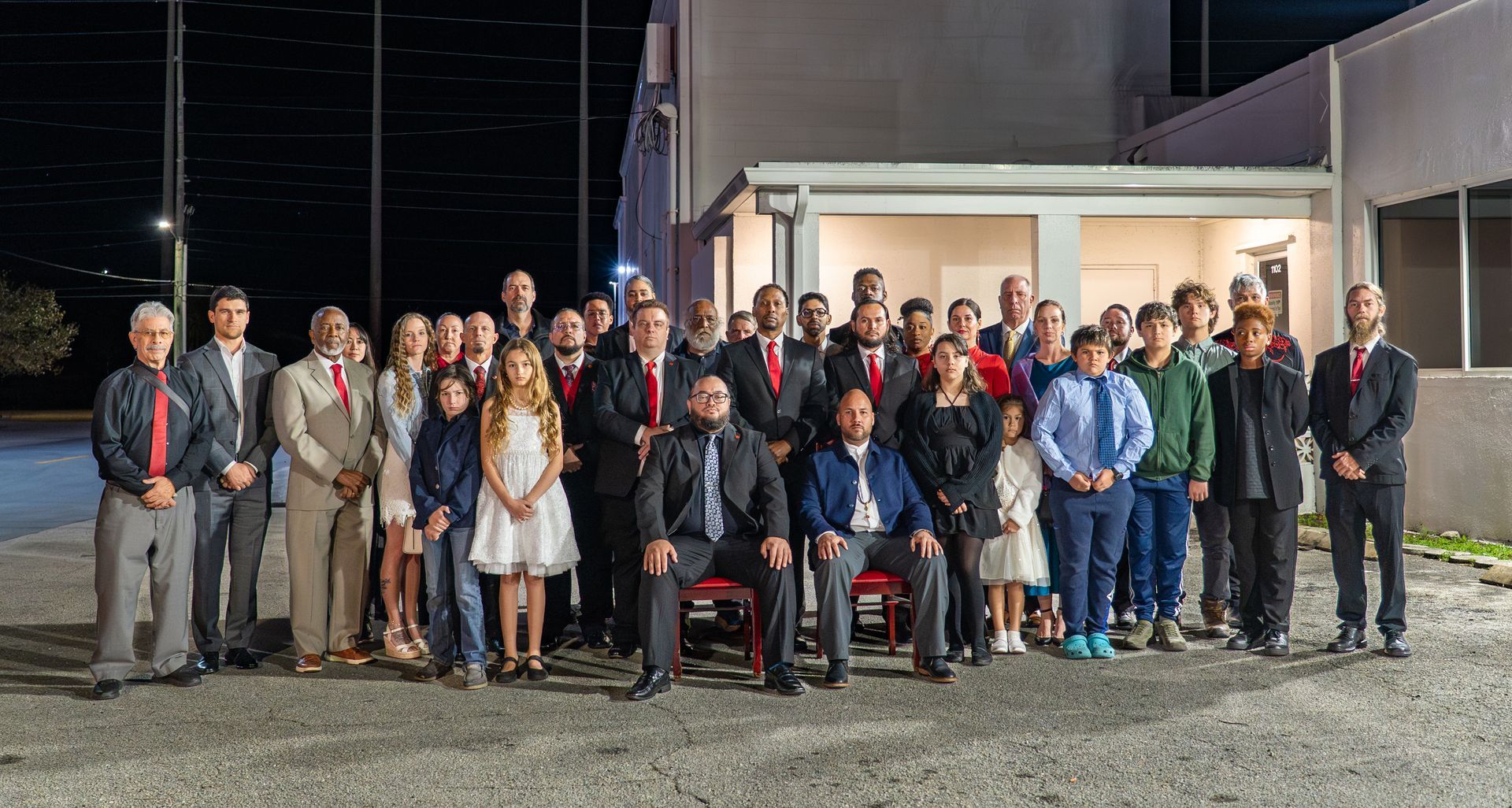
Greg’s story is a testament to the fact that Ving Tsun is not just a method of self-defense, but a blueprint for living a healthier, more engaged life at any age. Whether you are looking to improve your balance, lose weight, or find a supportive community that feels like family, our doors are open. At Moy Yee Hop Ving Tsun Kung Fu, we honor the classical traditions that have proven effective for centuries, adapting them to meet you exactly where you are physically.
Don't let another year go by wondering "what if." Join our Kung Fu family and discover what Ving Tsun can do for you.
Or visit us at www.moyyeehopvingtsunkungfu.com to schedule your complimentary visit!
Contact Us
More Recent Posts