By clicking “Accept All Cookies”, you agree to the storing of cookies on your device to enhance site navigation, analyze site usage, and assist in our marketing efforts. View our Privacy Policy for more information.
Best Martial Arts for Working Professionals
Compare the best martial arts for working professionals and choose training that builds practical self-defense, focus, fitness, and lasting discipline.
By
July 12, 2026

Related

A demanding career can make fitness feel like another obligation on an already full calendar. The best martial arts for working professionals are not necessarily the ones with the flashiest techniques or hardest workouts. They are the systems and schools that develop practical skill, physical confidence, and mental focus while fitting into a life that includes work, family, travel, and real responsibilities.
For many adults, the right training becomes a protected part of the week rather than another item to squeeze in. A serious martial art provides a constructive change of pace after meetings, deadlines, and screen time. It asks you to be present, solve problems under pressure, and steadily improve through disciplined practice.
What Working Professionals Need From Martial Arts Training
A professional does not need a class built around exhaustion for its own sake. They need instruction that respects consistency. Training twice a week for years will produce far more meaningful results than attending an intense program for one month and leaving with an injury or a burned-out schedule.
Practical self-defense should also be part of the equation. While every martial art has value, working adults often want to understand distance, balance, timing, awareness, and how to protect themselves at close range. They want confidence without false promises. Good training builds capability through repetition, qualified coaching, and responsible partner practice.
The culture of the school matters just as much. A room filled with respectful people who take their training seriously can become a welcome community outside the workplace. Professionals should be able to train hard without having to prove themselves through reckless sparring, unnecessary ego, or a beginner experience that feels intimidating.
Best Martial Arts for Working Professionals: The Main Options
There is no single art that is right for every adult. Your goals, physical condition, previous injuries, schedule, and preferred learning style all matter. Still, a few disciplines consistently serve professionals well when taught by capable instructors.
Ving Tsun Kung Fu
Ving Tsun, also known as Wing Chun, is a strong choice for adults who want a disciplined system of close-range self-defense that rewards structure, efficiency, and intelligent movement. Its principles include protecting the centerline, maintaining balance, managing distance, and using simultaneous attack and defense rather than relying on wide, athletic movements.
This can be especially valuable for professionals who may not have the time or desire to train like full-time competitors. Ving Tsun is not based on trying to overpower an opponent. Proper instruction teaches students to use body alignment, positioning, sensitivity, and direct technique. Its forms provide a clear curriculum, while partner training develops timing and adaptability.
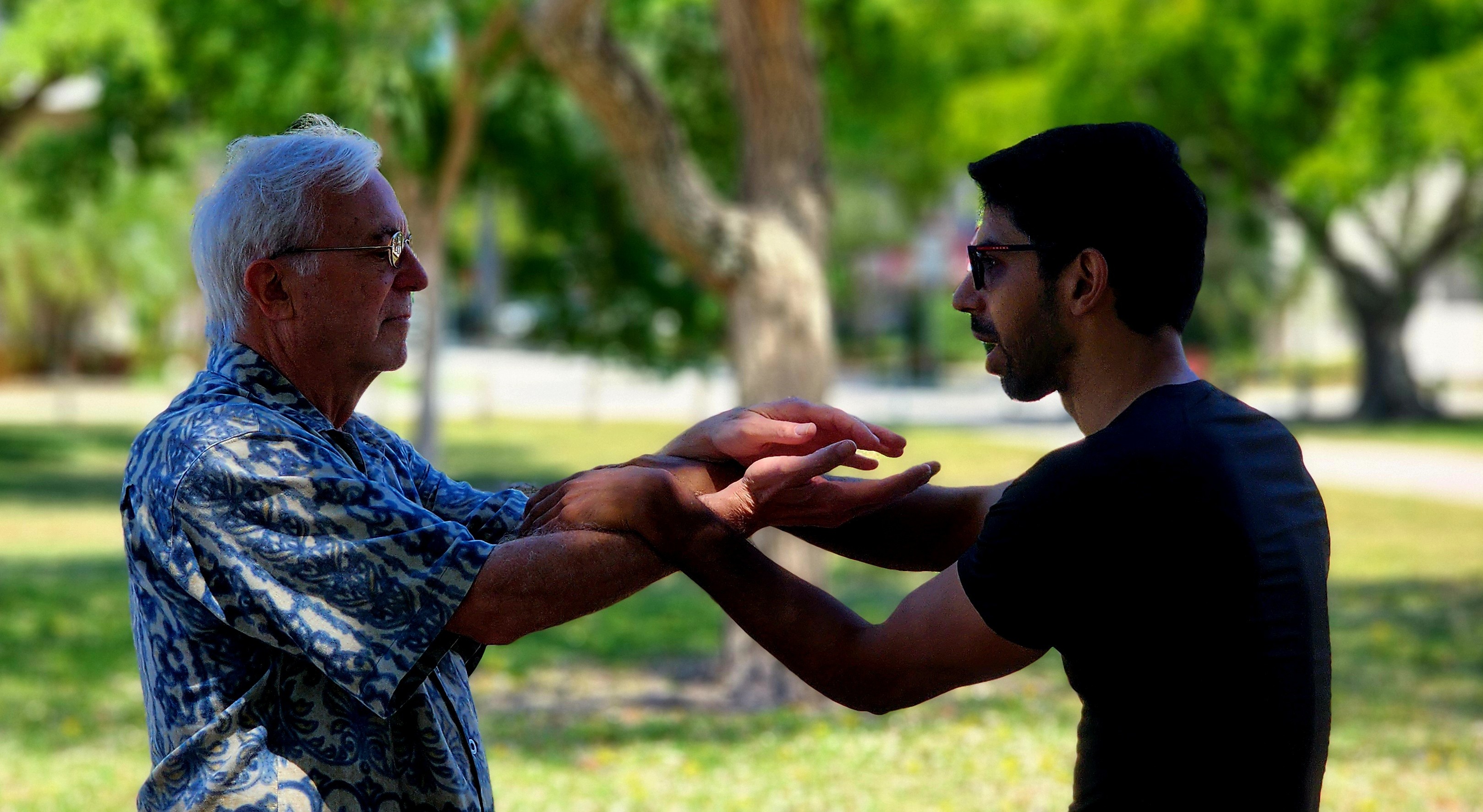
Chi Sao, often called sticking-hands training, is one of Ving Tsun's distinctive methods. Students learn to recognize pressure, openings, and changes in an opponent's position through controlled contact. It does not replace situational awareness or broader self-defense preparation, but it develops calmness and responsiveness at close range in a way that many adults find deeply engaging.
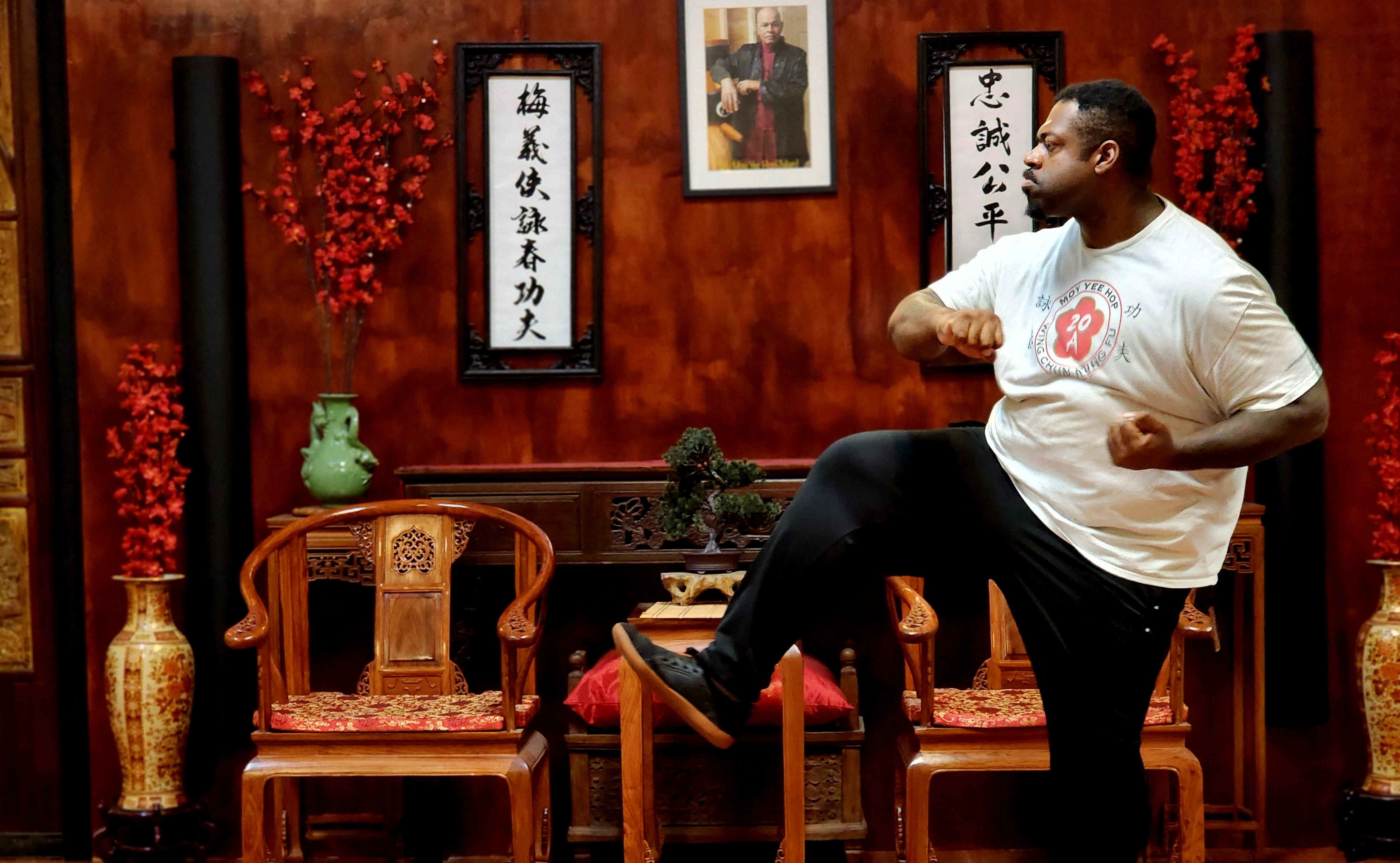
A traditional Ving Tsun school also offers something beyond a workout: a lifelong path. In the Moy Yat Kung Fu system, the art is taught through a structured transmission of principles, forms, drills, and guided correction. That depth gives busy adults a reason to keep returning as their understanding grows.
Boxing
Boxing is direct, demanding, and excellent for conditioning. It develops footwork, hand speed, defensive movement, distance management, and the ability to remain composed while another person is moving toward you. For professionals seeking a powerful stress release and measurable cardiovascular improvement, boxing is hard to beat.
The trade-off is that quality matters greatly. A gym that treats frequent hard sparring as the only sign of progress may not suit someone with a career, family obligations, or concerns about head impact. Technical boxing classes with controlled sparring options can offer tremendous benefits without making unnecessary risk part of the routine.
Brazilian Jiu-Jitsu
Brazilian Jiu-Jitsu is well suited to analytical learners. It teaches control, leverage, escapes, and submissions, primarily through grappling. Many professionals enjoy its problem-solving nature: every position presents a technical puzzle, and progress comes from learning how to make small adjustments under resistance.
It can be useful for understanding what happens if a confrontation becomes a clinch or goes to the ground. However, ground training is physically demanding and can place stress on fingers, shoulders, knees, and necks. Professionals with previous joint issues should communicate openly with instructors and choose a school where beginners are taught to train with control.
Muay Thai
Muay Thai provides a complete striking experience using punches, kicks, knees, elbows, and clinch work. It builds conditioning, coordination, confidence, and a strong understanding of range. Adults who enjoy athletic training and want a challenging outlet may find it highly rewarding.
Its demands are real, though. Heavy bag work, pad rounds, kicking drills, and clinching can be tough on the body when recovery is limited. It may be an excellent choice for someone who enjoys high-intensity training, but it is less appealing for a professional who needs a lower-impact, more principle-centered practice after a long day at work.
Judo or Traditional Karate
Judo develops balance, grips, throws, and falling skills. Karate can build striking fundamentals, body mechanics, discipline, and strong habits through forms and structured drills. Both can be valuable for professionals, particularly when a school emphasizes adult instruction and safe progression.
The deciding factor is often the individual academy. Judo requires comfort with falling and close physical contact. Karate varies widely from school to school, from competition-focused programs to traditional training with practical applications. Visit a class and observe how adults are coached before deciding.
Why Ving Tsun Fits a Professional Life
The best training is training you can sustain. Ving Tsun offers a practical balance of physical engagement and thoughtful study. A student can work on stance, structure, footwork, forms, and partner drills without needing to be the fastest person in the room. Improvement comes from refinement, not from trying to win every exchange.
That approach has real value after a day spent making decisions. Training requires focus, but it can also clear mental clutter. You are not checking email between sets or staring at a treadmill display. You are learning to stand with better alignment, respond to pressure with composure, and apply principles with another person in front of you.
Ving Tsun also scales well across life stages. A younger professional may enjoy vigorous drills and more demanding conditioning. An older adult can continue studying structure, sensitivity, timing, and forms at a pace appropriate to their body. Serious Kung Fu should challenge students while helping them train for the long term.
How to Choose a School You Will Keep Attending
Start by looking beyond the class schedule and promotional claims. Watch how the instructor corrects beginners. Notice whether students train with control, whether the curriculum has a clear progression, and whether the atmosphere feels focused rather than performative.
Ask what a new student can expect during the first three months. A credible school can explain how it introduces stance, movement, basic defense, partner drills, conditioning, and safety. It should not promise instant mastery or suggest that one technique works against every threat.
Consider your commute and realistic availability. A school close to home or work may be better than a famous academy you can only reach once a month. For residents of Jupiter, Palm City, Port St. Lucie, Vero Beach, and Fort Lauderdale, convenient access can make the difference between good intentions and a lasting practice.
Finally, give yourself permission to begin as a beginner. You do not need prior flexibility, fighting experience, or perfect fitness. You need a willingness to listen, practice, and return. The right martial arts school will meet you where you are while holding you to a meaningful standard.
A career can demand much of your attention, but it should not take away your ability to develop strength, confidence, and discipline. Choose training that is authentic, practical, and worthy of your time, then let consistent practice shape the way you move through both the school and the rest of your life.
.jpg)
.jpg)