By clicking “Accept All Cookies”, you agree to the storing of cookies on your device to enhance site navigation, analyze site usage, and assist in our marketing efforts. View our Privacy Policy for more information.
Are Private Kung Fu Lessons Worth It?
Private kung fu lessons offer focused coaching, faster progress, and practical self-defense training built around your goals, pace, and schedule.
By
April 26, 2026
.jpg)
Related

Some students know it after the first class. They enjoy training, respect the art, and want more direct attention than a group setting can give. That is where private kung fu lessons become valuable. For the right student, they are not a luxury. They are a serious way to sharpen structure, correct habits early, and train with a level of focus that is hard to match in a room full of people.
In authentic Ving Tsun, details matter. A slight collapse in the elbow, poor centerline control, unnecessary tension, or late timing can change the outcome of an exchange. Group classes build community, consistency, and shared learning. Private instruction gives you something different - concentrated correction and a training pace built around your actual needs.
What private kung fu lessons really offer
Private kung fu lessons are not simply regular classes with fewer people. Done properly, they create a different training environment. The instructor can observe your stance, balance, hand position, footwork, and response under pressure without splitting attention across a large group. That means less guessing, less repeating errors, and more useful feedback in the moment.
This matters even more in a system like Ving Tsun, where efficiency is not based on athletic force. It is based on alignment, timing, sensitivity, and intelligent movement. Those qualities improve fastest when the instruction is precise. A private lesson allows the teacher to slow things down when needed, then raise the pressure as your skill improves.
For many adults, this format also removes a common obstacle: feeling behind. Some students hesitate to begin because they think they need to be younger, more flexible, or already coordinated. Others have trained before and want to unlearn habits from styles that did not emphasize economy of motion or practical self-defense. Private instruction meets each student where they are, without rushing or watering down the art.
Who benefits most from private kung fu lessons
The short answer is that it depends on the student and the goal.
A beginner often benefits because the foundation gets built correctly. Early habits shape everything that follows. If a student learns how to hold structure, control the center, and move with purpose from the start, later progress tends to be cleaner and more stable.
Busy professionals also do well with private training. Their schedule may not line up neatly with a standard class calendar, but they still want disciplined instruction and measurable progress. Private sessions make that possible without turning training into something casual or inconsistent.
Women seeking practical self-defense often appreciate the focused environment. They can ask specific questions, work through realistic scenarios, and develop confidence through repetition and coaching that is tailored to them. The same is true for older adults who want to improve coordination, posture, reflexes, and balance while training in a methodical way.
Children can benefit too, especially if they need extra structure, individual encouragement, or help building confidence. That said, some children grow even more in a group where they learn discipline alongside peers. Private lessons can strengthen development, but they are not always a full replacement for the social and character-building value of class training.
Why private lessons can accelerate progress
Progress in martial arts is not only about how hard you train. It is also about how accurately you train.
In a private session, the feedback loop is much tighter. You perform a movement, receive correction, adjust it, and repeat with intent. That cycle can happen dozens of times in one lesson. Instead of spending weeks wondering whether your Tan Sau is stable or your stepping is rooted, you get immediate answers.
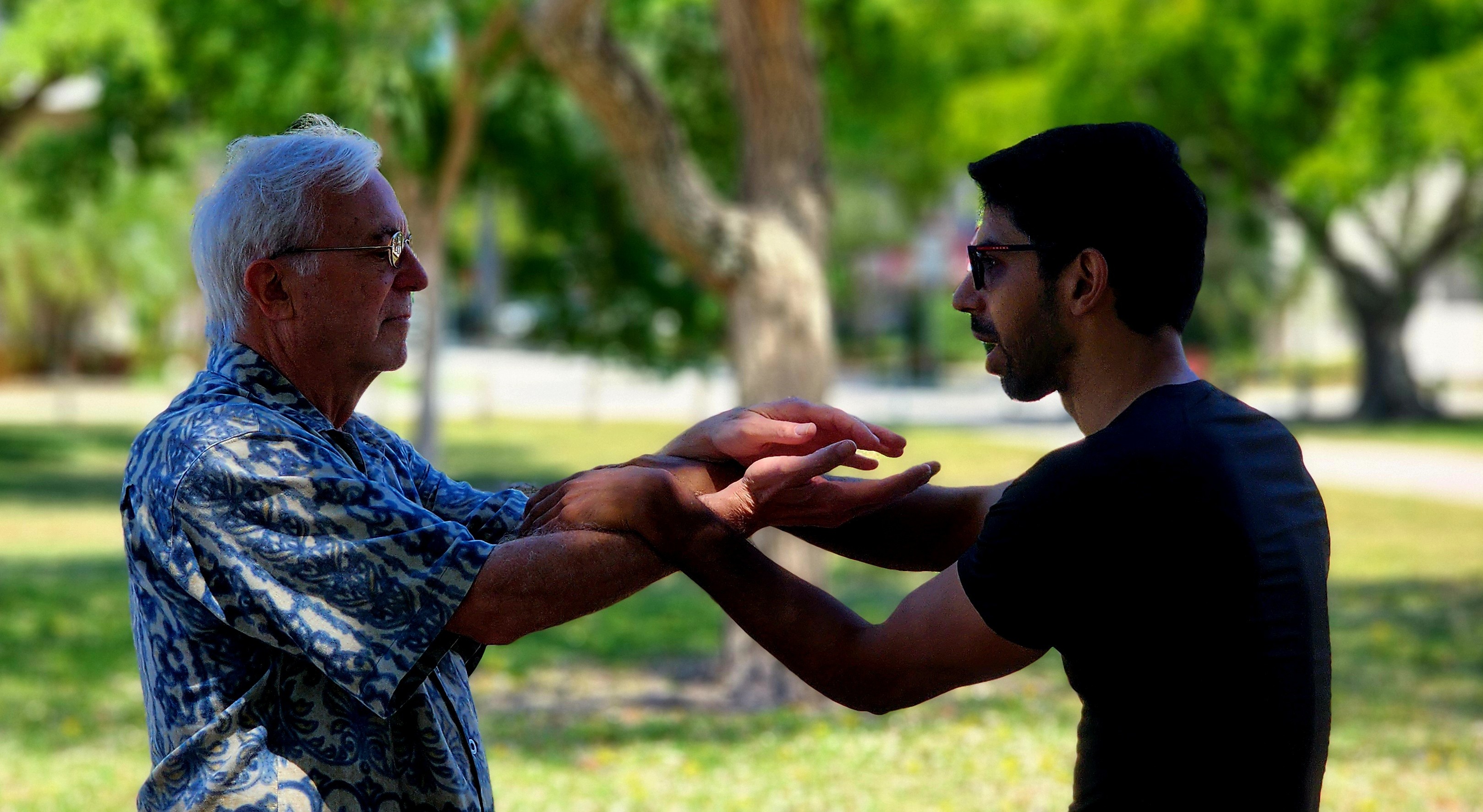
There is also more room for applied training. If your goal is self-defense, private sessions can spend more time on distance, timing, pressure, and decision-making. If your goal is to improve Chi Sao fundamentals, the lesson can focus on sensitivity, energy reading, and structural integrity under contact. If your goal is confidence, the training can build that through clear progression rather than vague motivation.
Faster progress does not mean easier progress. Good private instruction is demanding. It exposes weakness quickly. It asks for concentration, humility, and repetition. But for students who value real development, that is exactly the point.
Private kung fu lessons vs. group classes
This is not a question of which format is better in every case. It is a question of what each format does best.
Group classes create rhythm. They teach students how to train with others, stay accountable, and become part of a Kung Fu family. They also expose students to varied body types, energy, timing, and reactions. That is important. Martial skill should not exist only in a controlled one-on-one setting.
Private lessons create depth. They let you spend more time on your individual gaps and strengths. They are especially useful when you are learning fundamentals, preparing for the next level, returning after time away, or working through a plateau.
For many students, the strongest path is a combination of both. Group classes provide structure and community. Private sessions refine what class reveals. One gives breadth, the other gives precision.
What to look for in a private instructor
Not all private martial arts instruction is equal. The instructor matters as much as the format.
A credible teacher should be able to do more than make you sweat. They should be able to explain why a movement works, how the system connects, and where your errors begin. In a lineage-based art, they should also teach from a clear tradition rather than improvising techniques from mixed sources.
That is especially important in Ving Tsun. Authentic instruction preserves the logic of the system. Centerline theory, simultaneous attack and defense, economy of motion, structure, and forward intent are not random ideas. They form a complete method. When a school teaches from preserved lineage, the student receives more than isolated drills. They receive an art with internal consistency.
A good private instructor should also know when to challenge and when to slow down. Serious training is not about ego. It is about transmission. The goal is to help the student build skill that is usable, honest, and repeatable.
What a private lesson should feel like
A quality session should leave you clearer, not confused.
You should know what you worked on, why it matters, and what needs attention before the next lesson. Some sessions will feel technical. Others will feel physically demanding. Some may reveal how much detail exists in a single shape or step. That can be humbling, but it is part of proper training.
Over time, you should notice specific changes. Your stance becomes more stable. Your hands travel less and arrive sooner. Your reactions become calmer. You stop trying to overpower situations and start understanding position, angle, and timing. These are not flashy results, but they are the marks of real development.
At Moy Yee Hop Ving Tsun Kung Fu, that standard of training reflects a larger commitment to preserving the art in its proper form while helping students apply it in real life.
Are private kung fu lessons worth the investment?
For a student who wants casual activity once in a while, maybe not. Group classes may be enough.
For a student who values authentic instruction, practical self-defense, and disciplined progress, private kung fu lessons can be well worth it. The investment is not only in time with an instructor. It is in cleaner fundamentals, fewer bad habits, and a more personal path through the system.
That does not mean private training is the only serious way to learn. It means it is one of the strongest ways to make your training more intentional. If your goal is to move beyond surface-level participation and truly understand the art, focused instruction can make a lasting difference.
The best training is the training you can stay committed to. If private lessons help you build that commitment with clarity and purpose, they are doing more than improving your technique. They are helping you build a practice that can serve you for years.
.jpg)