By clicking “Accept All Cookies”, you agree to the storing of cookies on your device to enhance site navigation, analyze site usage, and assist in our marketing efforts. View our Privacy Policy for more information.
Wing Chun Self Defense Classes That Matter
Wing chun self defense classes build practical skill, confidence, and discipline through authentic training rooted in structure, timing, and control.
By
July 13, 2026
Related

A lot of people start searching for wing chun self defense classes after a moment that stays with them - a walk to the car that felt wrong, a job that demands confidence under pressure, or the simple realization that fitness alone is not the same as being prepared. What they usually want is not theatrics. They want a method that is direct, teachable, and grounded in reality.
That is where Wing Chun stands apart. At its best, it is not built around flashy movement or brute force. It is a disciplined fighting system shaped by efficiency, structure, and the ability to respond under pressure. For adults, women, parents, and older students, that matters. Self-defense training has to be usable by real people with real bodies, real schedules, and real responsibilities.
What wing chun self defense classes should actually teach
A serious self-defense class should do more than make students feel busy. It should give them repeatable skills they can recall under stress. In Wing Chun, that begins with centerline awareness, body alignment, balance, and the principle of simultaneous attack and defense. Instead of treating defense as a separate phase, students learn to protect and respond in one action.
That sounds simple, but it takes honest training to develop. Good instruction teaches how to manage distance, maintain structure, generate power without wasted motion, and stay calm when an opponent is pressing forward. These ideas are not reserved for advanced students. They are part of the foundation.
This is also why class quality matters more than marketing language. Some programs sell self-defense as a fast confidence boost. Real training is more disciplined than that. Confidence comes as a result of repetition, correction, and pressure-tested fundamentals.
Why Wing Chun appeals to adults and families
Many people looking into martial arts are not trying to become competitive fighters. They want practical ability, better coordination, stronger posture, and a clear training path that respects their time. Wing Chun fits that need well because it does not depend on athletic extremes to be effective.
For working adults, the value is often in the system's economy. Movements are compact. Concepts are connected. Progress comes through understanding position, timing, and sensitivity rather than trying to overpower someone. That makes it appealing to beginners, professionals, women, and older adults who want substance without unnecessary wear and tear.
Parents tend to value something else as well - discipline with purpose. Children and mature teens benefit from structured instruction that builds attention, respect, and body control alongside self-defense skill. A good school teaches more than techniques. It teaches how to train, how to listen, and how to carry composure outside class.
The difference between authentic training and generic martial arts fitness
Not every martial arts school approaches Wing Chun as a complete system. Some offer a few borrowed drills, blend it loosely into cardio training, or reduce self-defense to motivational slogans. That may still help with exercise, but it is not the same as studying an art with lineage, standards, and a coherent method.
Authentic instruction matters because self-defense depends on detail. Elbow position, stance integrity, forward intention, relaxation, and timing are not minor points. They determine whether a movement works against resistance or falls apart under pressure. A school that preserves its system carefully is usually more serious about those details.
This is where lineage has real value. It is not about nostalgia. It is about quality control. When an academy teaches within a clear tradition, students are less likely to receive a watered-down version built around trends. They are being entrusted with an art that has been refined, preserved, and passed down with care.
For students in Southeast Florida who want that level of seriousness, Moy Yee Hop Ving Tsun Kung Fu represents a school culture rooted in the Moy Yat system and committed to preserving Ving Tsun in its classical form while making it practical for modern students.
What to expect in wing chun self defense classes
A strong beginner program should feel welcoming, but it should also feel structured. New students are usually introduced to basic stance work, alignment, centerline theory, hand shapes, stepping, and partner drills that teach distance and control. The goal is not to overwhelm. The goal is to build a base that holds up later.
As students progress, they begin to understand why Wing Chun is often described as efficient. Instead of collecting endless techniques, they learn principles that apply across many situations. A straight punch, a deflection, a turn, a step, a controlled entry - these are trained until they become connected rather than isolated.
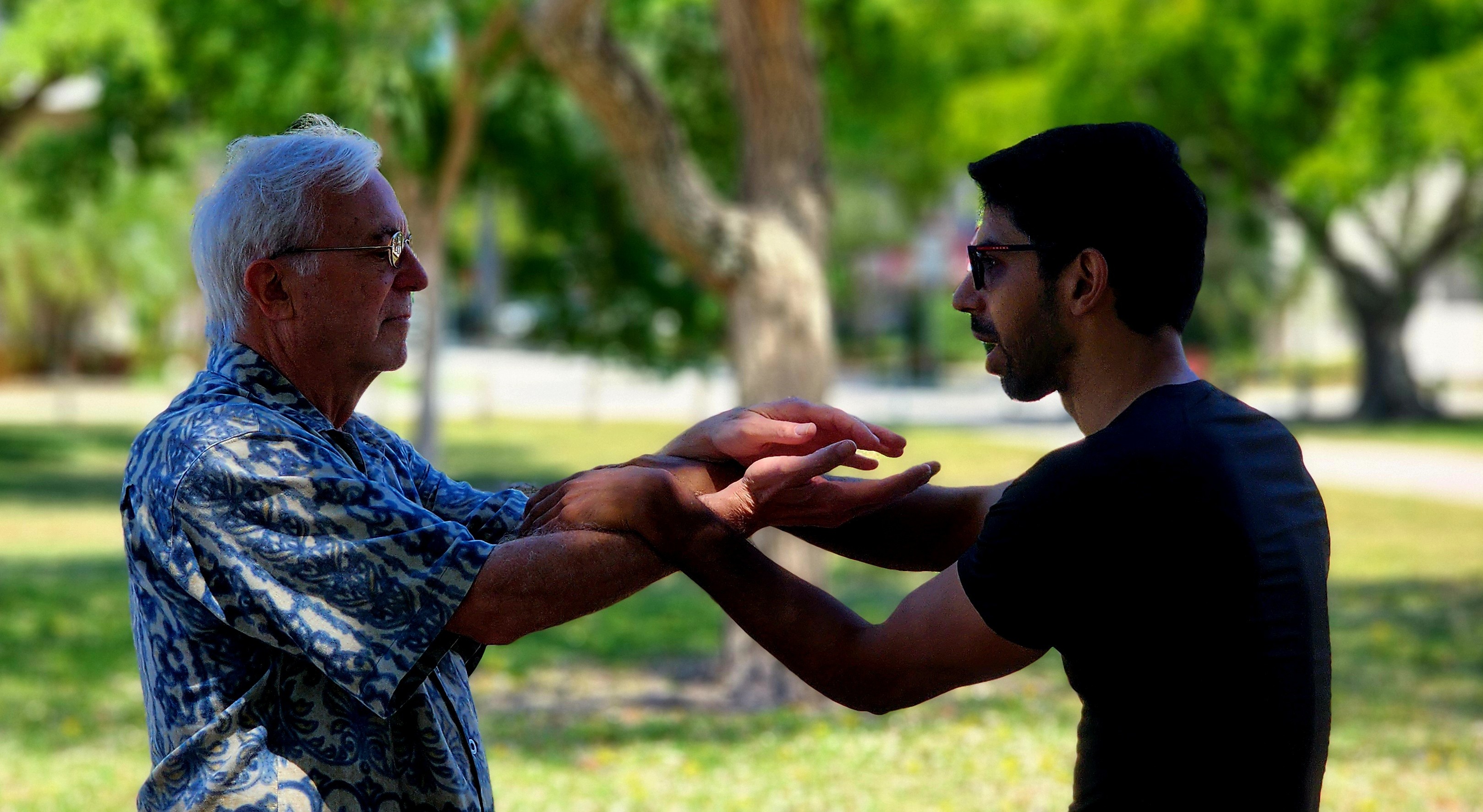
Partner work is especially important. Self-defense cannot stay theoretical. Students need to feel pressure, timing, contact, and resistance in a safe environment. This is one reason Chi Sao and related sensitivity training matter. They help students develop reflexes, touch awareness, and the ability to adapt when a situation becomes chaotic or close range.
That said, there are trade-offs. If someone wants a fitness class with loud music and constant variety, a traditional Wing Chun school may feel more disciplined and technical. If someone wants instant results in two sessions, they may be disappointed. Wing Chun is practical, but practical does not mean effortless. The method is efficient. The training still requires patience.
How to tell if a class is right for you
The best school for one student is not automatically the best for another. A parent looking for character development in a child may prioritize instructor presence and culture. A woman seeking self-defense may care most about practical application, safety, and the ability to train in a focused environment. A veteran or working professional may want both serious instruction and a community that respects discipline and personal growth.
When visiting a school, pay attention to whether the teaching feels clear and purposeful. Are students being corrected on structure, timing, and mechanics, or just being run through drills? Does the class balance discipline with encouragement? Do instructors explain why a movement works, not just what to copy? Those signs say a lot.
Also look at the people training there. A healthy school culture should include different ages, body types, and experience levels progressing together with mutual respect. That usually reflects a teaching method that is sustainable and a community that values development over ego.
The practical value beyond self-defense
People often begin for protection and stay for everything else. Consistent Wing Chun training improves posture, balance, coordination, focus, and stress management. It can sharpen how a person carries themselves in everyday life. That change is not cosmetic. Better structure and awareness often lead to better confidence, and better confidence changes how people move through the world.
There is also a mental benefit that should not be overlooked. Traditional martial arts ask for patience, humility, and regular effort. Progress is earned over time. In a culture that often rewards shortcuts, that process has value of its own. Students learn to become calmer, more disciplined, and more resilient.
For many families, this is the deeper reason to choose a classical school over a trend-driven program. They are not only signing up for classes. They are entering a training environment that supports long-term growth.
Why local access matters in Southeast Florida
Convenience is not a small issue. Even the best class will not help much if the drive makes regular attendance unrealistic. Students in Jupiter, Port St. Lucie, Palm City, Vero Beach, and Fort Lauderdale often need a school that fits into work, school, and family life without sacrificing quality.
That is why local availability matters alongside credibility. The right academy should offer real instruction close enough to support consistency. In self-defense training, consistency is what turns information into ability. Showing up week after week is where reactions sharpen, posture improves, and confidence becomes earned rather than imagined.
If you are considering wing chun self defense classes, choose a school that treats the art with respect, teaches with structure, and welcomes you into a serious training culture. The right class should challenge you, steady you, and give you something lasting - not just for the moments you hope never come, but for the way you live every day.
.jpg)
.jpg)