By clicking “Accept All Cookies”, you agree to the storing of cookies on your device to enhance site navigation, analyze site usage, and assist in our marketing efforts. View our Privacy Policy for more information.
Martial Arts for Older Adults That Work
Martial arts for older adults can build balance, confidence, and real self-defense skills. See why Ving Tsun is a practical fit for later life.
By
September 10, 2026
Related

A lot of people reach a certain age and get told to slow down. Train gently. Avoid impact. Keep activity light and predictable. The problem is that many older adults do not need less challenge - they need the right kind of challenge. Martial arts for older adults can offer exactly that when the training is structured, purposeful, and taught with respect for the individual.
Not every martial art fits every body, and not every school understands how to teach students in later life. That matters. A serious program should not treat older beginners like fragile spectators, but it also should not throw them into high-risk training that ignores joint health, recovery, and past injuries. The right training develops skill, posture, timing, balance, and confidence without wasting motion or relying on youthful athleticism.
Why martial arts for older adults matter
For many adults in their 50s, 60s, and beyond, the goal is not to collect trophies or prove toughness. It is to stay capable. That can mean moving with more coordination, feeling stronger on your feet, reacting with more control under pressure, or having practical self-defense skills that make sense in real life.
There is also a mental side that often gets overlooked. Good martial training asks for focus, discipline, and calm decision-making. You are not just exercising. You are learning how to organize your body and your attention at the same time. For older adults, that kind of training can be deeply rewarding because progress is measured by skill and understanding, not just speed or brute force.
The community aspect matters too. Mature students often want more than a workout. They want a place with standards, respect, and real instruction. A school with lineage, structure, and a family-oriented culture gives training a different weight. It becomes part of how you carry yourself, not just something you do for an hour.
What older adults should look for in a martial art
The first question is not, "Am I too old?" The better question is, "Does this system and this school train intelligently?" Some arts depend heavily on explosive kicks, extreme flexibility, or hard collisions. Those can be excellent in the right setting, but they are not always the best starting point for someone managing stiffness, previous surgery, lower back pain, or reduced recovery speed.
A better fit is often a system that values structure, efficiency, and position. Techniques should make sense biomechanically. Training should improve balance rather than constantly compromise it. Partner work should be progressive, with control and purpose, not reckless intensity.
Instruction style matters just as much as the art itself. Older adults usually do best in an environment where fundamentals are taken seriously. That means learning stance, alignment, footwork, distance, and timing in a methodical way. A school that respects fundamentals is usually a school that can teach across age groups.
Why Ving Tsun can be a strong fit later in life
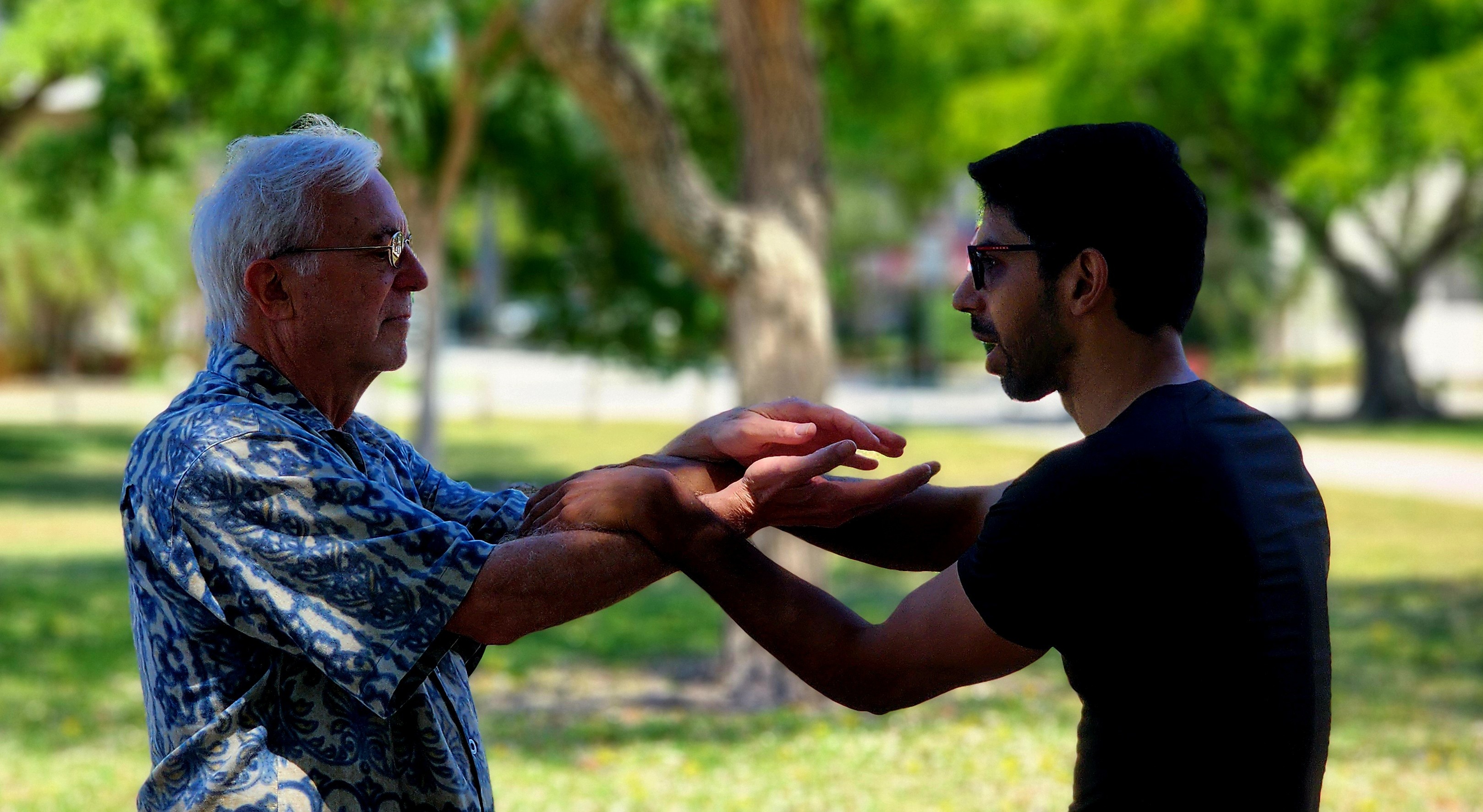
Ving Tsun is especially relevant in this conversation because it is built on efficiency. Rather than relying on strength against strength, it teaches economy of motion, centerline control, structure, and simultaneous attack and defense. Those principles are valuable at any age, but they become even more valuable when a student wants practical skill without unnecessary wear and tear.
That does not mean Ving Tsun is easy. Serious training is still serious training. You will be asked to pay attention, repeat details, refine positions, and train with discipline. But the system does not require flashy movement to be effective. It rewards precision, sensitivity, timing, and intelligent body mechanics.
For older adults, that can be a major advantage. If your goal is to become more stable, more aware, and more capable at close range, a classical Ving Tsun program offers a direct path. You are not spending your time chasing movements that look impressive but have little practical value. You are building a foundation that supports both self-defense and everyday function.
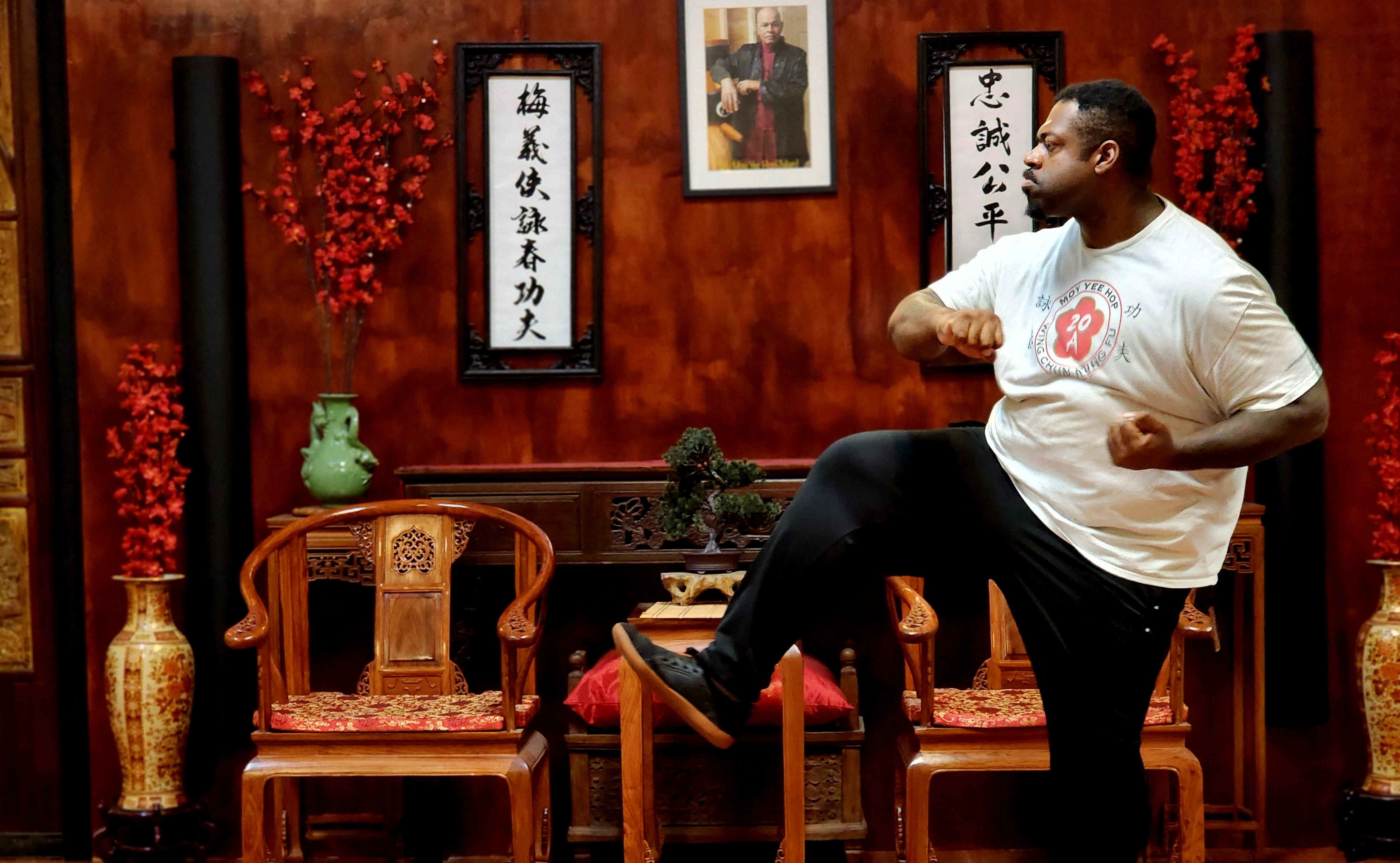
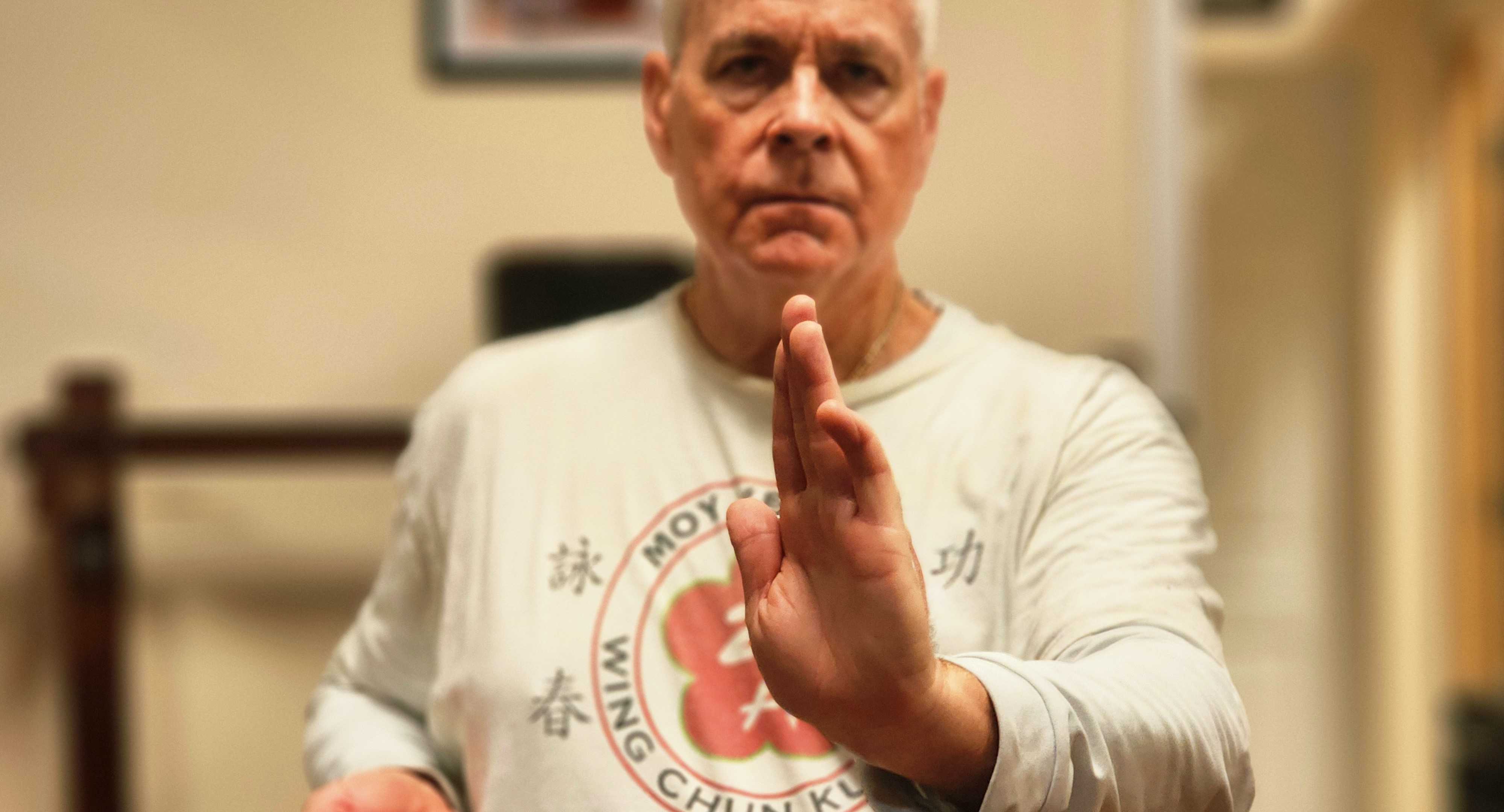
At a traditional school such as Moy Yee Hop Ving Tsun Kung Fu, that process is tied to authentic transmission. That matters because lineage is not just a branding detail. It shapes how the system is taught, what gets preserved, and whether students are receiving the art in a pure and consistent form.
Common concerns older beginners have
Many older adults worry about getting hurt, falling behind, or feeling out of place next to younger students. Those concerns are real, and a good instructor should address them directly.
Injury risk depends heavily on how training is introduced. A well-run class does not start by demanding speed and force. It starts with position, balance, awareness, and controlled repetition. Students build capacity over time. That approach is not watered down. It is disciplined.
Feeling behind is also common, especially for adults who have never trained before. But martial arts is one of the few activities where maturity can be a real advantage. Older students often listen better, train more patiently, and appreciate nuance faster than younger students who want quick results. Progress may look different, but it is often deeper.
As for fitting in, culture matters. In a healthy school, students are not there to prove who is the toughest person in the room. They are there to train honestly, help each other improve, and uphold the standards of the art. That kind of environment makes a major difference for beginners of any age.
Benefits that go beyond self-defense
Self-defense is a strong reason to begin, but it is rarely the only benefit students notice. One of the first improvements many older adults experience is balance. Good stance work and controlled movement teach you to organize your weight, stabilize your base, and move more confidently.
Posture often improves as well. Many people spend years tightening through the shoulders, collapsing through the spine, or moving with tension they barely notice. Traditional martial training brings awareness back to alignment. Over time, that can change how you stand, walk, and respond physically to stress.
There is also value in learning to stay calm under pressure. Partner drills, sensitivity training, and structured repetition develop composure. You start to react less with panic and more with control. That has clear self-defense value, but it also carries into daily life.
Then there is the deeper benefit of continued growth. Later life should not be a stage of decline in spirit. It should be a stage of refinement. Training in a traditional martial art gives older adults a path of lifelong study - one that challenges the mind, strengthens the body, and cultivates discipline.
How to start safely and train for the long term
The best approach is honest communication and steady progression. If you have limitations, say so. A credible instructor wants that information. Prior injuries, balance concerns, medications, and recovery issues all affect how training should begin.
It also helps to leave ego at the door. You do not need to move like a 25-year-old to train well. You need consistency, attention, and willingness to learn. In many cases, the student who trains carefully three times a week progresses further than the student who trains recklessly for a month and disappears.
Recovery should be taken seriously. Older adults often benefit from a little more time between hard efforts, along with good sleep, hydration, and mobility work. That is not a weakness. It is intelligent training. The goal is not to survive class. The goal is to keep building year after year.
Is it too late to begin?
For most people, no. It may be too late to train as if age does not exist, but it is not too late to begin meaningful martial study. In fact, many adults come to martial arts at the right time - when they are ready to value discipline over distraction and substance over spectacle.
The right school will meet that seriousness with real instruction. It will teach an art worth preserving, in a way that respects both the tradition and the student standing in front of it. If you are looking for a practice that builds confidence, practical ability, and personal growth, age is not a reason to stay out. It may be the very reason to start with purpose.
A strong life is not built by withdrawing from challenge. It is built by meeting the right challenge with patience, humility, and steady effort.
.jpg)
.jpg)