By clicking “Accept All Cookies”, you agree to the storing of cookies on your device to enhance site navigation, analyze site usage, and assist in our marketing efforts. View our Privacy Policy for more information.
How to Choose an Authentic Wing Chun School
Learn how to choose an authentic wing chun school by checking lineage, training method, culture, and real self-defense value for lasting growth.
By
September 15, 2026

Related

You can feel the difference within minutes. Walk into one school and the class looks busy, loud, and scattered. Walk into an authentic wing chun school and the room feels organized, purposeful, and calm under pressure. Movements are not performed for show. They are trained to build structure, timing, sensitivity, and practical self-defense that holds up when it matters.
That difference matters more than most beginners realize. If you are an adult looking for real self-defense, a parent searching for meaningful martial arts training for your child, or someone who wants a serious path instead of a fitness trend, the quality of the school will shape everything that follows. Good marketing can make many programs look similar. Authentic instruction does not reveal itself in slogans. It reveals itself in lineage, teaching method, class culture, and the consistent development of students over time.
What makes an authentic wing chun school
Authenticity in Wing Chun is not about nostalgia. It is about preservation of a complete system and the disciplined ability to transmit it correctly. A school can say the right words and still teach a watered-down version of the art. The real question is whether the instruction remains faithful to the system, or whether it has been diluted to fit trends, entertainment, or quick promotions.
An authentic wing chun school teaches a coherent body of knowledge. Forms, partner drills, footwork, striking, centerline control, timing, and Chi Sao are not treated as disconnected pieces. They are taught as parts of one living method. Students learn why structure matters, how simultaneous attack and defense work, and how economy of motion creates efficiency. Training is built layer by layer so that the art develops in the body, not just in theory.
Lineage also matters, but not as a decoration. In a traditional martial art, lineage helps protect the integrity of what is taught. It tells you whether the system came through direct transmission from qualified teachers who preserved the principles, details, and standards of the art. That does not mean a school should live in the past. It means the school should know exactly what it is preserving and why.
Lineage should shape training, not just branding
Many schools mention lineage because they know prospective students are looking for credibility. That is fair. But lineage has value only when it clearly influences the quality of instruction on the floor.
If a school claims heritage yet classes feel random, overly commercial, or disconnected from core principles, the lineage claim means very little. In a serious program, lineage shows up in precision. The instructor can explain where the method comes from, but more importantly, can teach it with clarity and consistency. Students are not left collecting techniques. They are being shaped by a system.
This is one reason classical Ving Tsun attracts thoughtful students. A preserved system offers a path. You are not improvising your education each month based on whatever is popular. You are entering a disciplined tradition with standards, progressions, and accountability. For many adults and families, that structure is exactly what makes training valuable for years rather than weeks.
The training should be practical from the start
Practical does not mean chaotic. It also does not mean every class should look like a fight. In fact, one of the signs of a strong school is that it knows how to build real fighting ability through disciplined progression.
A beginner should be learning stance, alignment, centerline awareness, striking mechanics, and coordinated movement. That may look simple to an outsider, but it is the foundation for everything that follows. Without structure, speed becomes wasted motion. Without timing, aggression becomes sloppiness. Without sensitivity, contact becomes guessing.
This is where many students make a costly mistake. They confuse intensity with effectiveness. An authentic school does not rush students into disorder and call it realism. It gives them a framework for handling pressure with efficiency. Over time, the student becomes more balanced, more composed, and more capable of generating power without overcommitting.
That kind of training serves a wide range of people. Working professionals need methods they can rely on under stress. Women often want practical self-defense that does not depend on brute strength. Parents want their children to gain discipline, confidence, and awareness, not just memorize routines. A serious Wing Chun program can meet those goals, but only when the school teaches the art as a functional system.
Signs of an authentic wing chun school in class
You do not need years of experience to recognize quality. You only need to pay attention to what the school rewards.
Look at the instructor first. Is the teaching specific, or vague? Are corrections based on body mechanics and principle, or just encouragement without substance? In a strong class, the teacher is not merely leading activity. The teacher is refining skill.
Then watch the students. Do senior students move with control, balance, and relaxed power? Do beginners receive patient guidance without being ignored or overwhelmed? A healthy school culture is disciplined, but not ego-driven. Students should challenge one another while still protecting the learning environment.
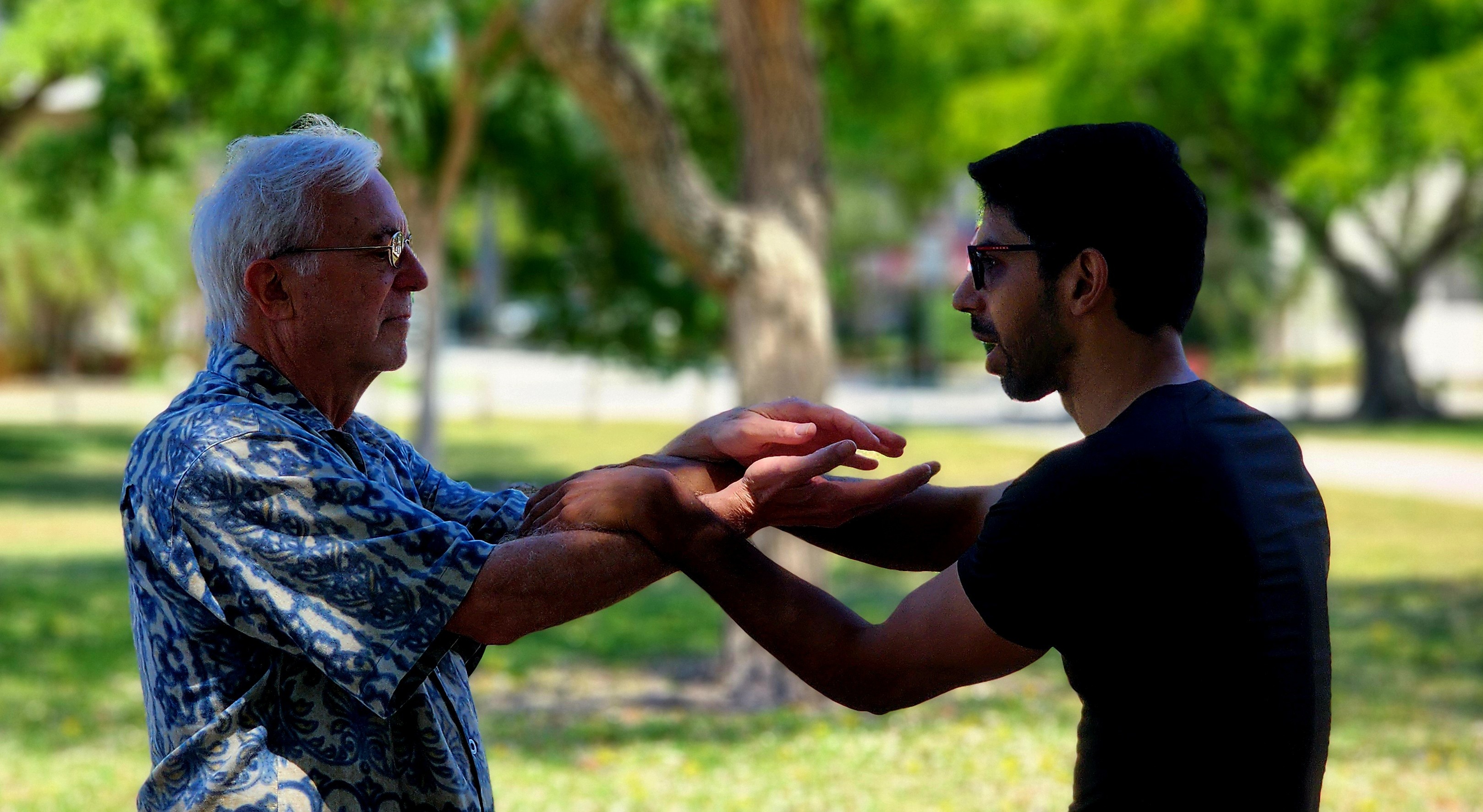
Also pay attention to how partner work is handled. Authentic training includes contact, timing, and responsiveness, but those elements should be introduced with purpose. Partner drills should sharpen skill, not feed recklessness. If everything is compliant, students may never develop usable timing. If everything is wild, students may never develop real precision. The best schools know how to balance both.
Why culture matters as much as curriculum
A martial arts school can have a respected lineage and still fail students if the culture is wrong. The right culture makes serious training sustainable. The wrong culture turns good material into a revolving door.
An authentic school should feel like a place where standards are high and people are genuinely welcome. That balance matters. Beginners should not feel they must prove themselves before they can belong. At the same time, the school should not lower the art to keep everyone comfortable. Respect, patience, and accountability should exist together.
For families, this is especially important. Parents are not only choosing a martial art. They are choosing an environment that will influence a child’s confidence, focus, and habits. Adults are doing the same for themselves, whether they realize it or not. A good school builds people while it builds skill.
That is why community should never be confused with casualness. A Kung Fu family is not formed by soft standards. It is formed by shared effort, mutual respect, and the understanding that everyone is participating in something worth preserving.
Beware of performance without substance
Some schools are built around appearances. They may emphasize flashy drills, social media moments, or constant rank advancement. None of those things automatically make a school inauthentic, but they can become distractions when they replace real development.
Wing Chun is subtle. Its value often becomes clearer the longer you train. Structure, pressure, sensitivity, and positioning do not always look dramatic to an observer, but they are exactly what make the art effective. A school that chases appearances may skip over those details because they require patience to teach and commitment to learn.
Ask yourself a simple question: does this school seem more interested in preserving the art and developing the student, or in impressing the visitor? The answer is usually visible.
What beginners in Southeast Florida should look for
If you are searching locally, convenience matters, but it should not be the only factor. A nearby school with weak instruction will waste far more than your commute time. Look for a place where the teaching is rooted in tradition, the classes are structured, and the self-defense value is clear.
For students across Southeast Florida, from Jupiter and Port St. Lucie to Palm City, Vero Beach, and Fort Lauderdale, the best fit is often a school that combines classical instruction with a welcoming community. That means programs for adults, women, and children should still reflect the same core system rather than becoming unrelated products. Serious schools adapt the teaching to the student while preserving the art itself.
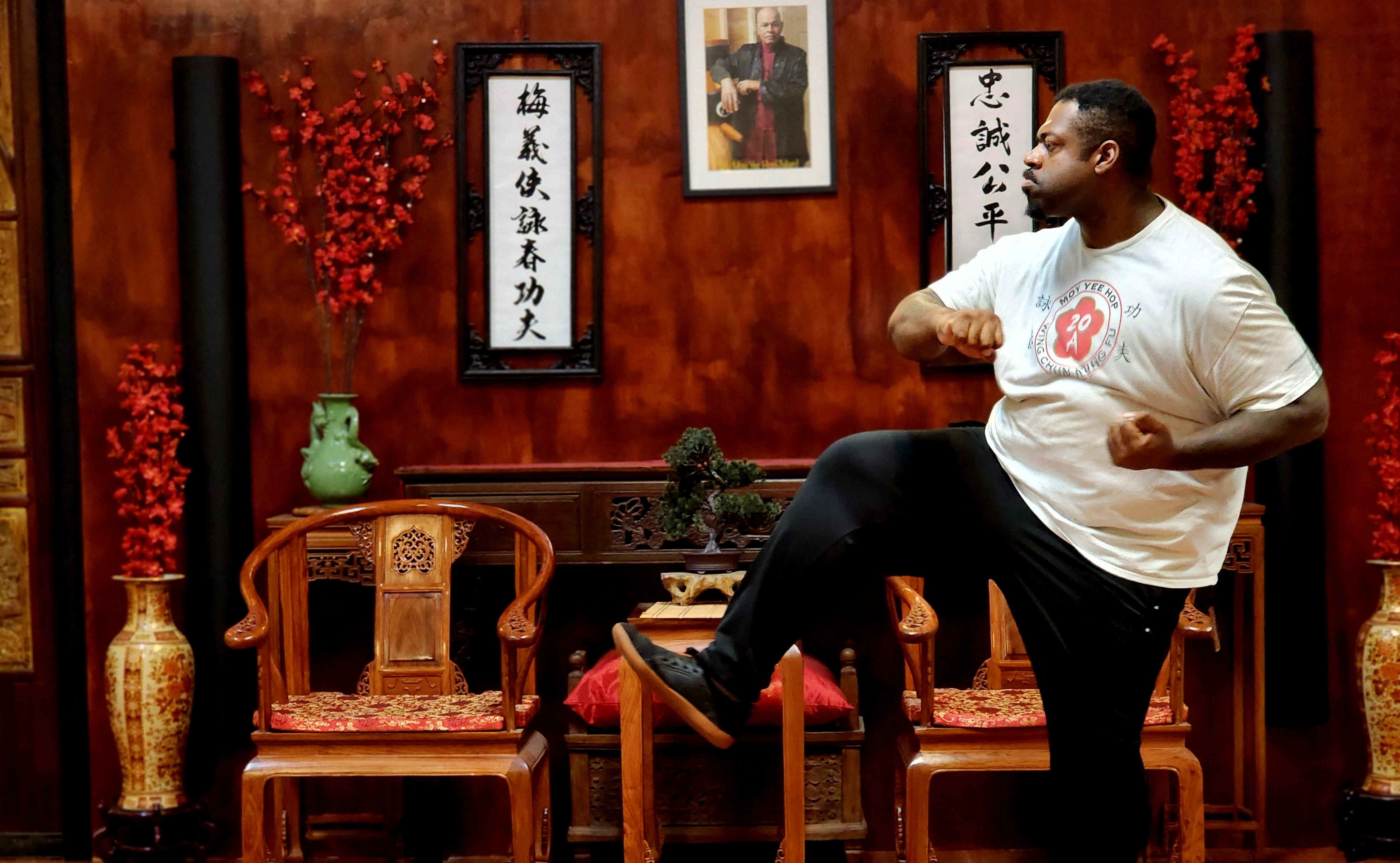
This is where a lineage-centered academy such as Moy Yee Hop Ving Tsun Kung Fu stands apart. The goal is not to present a generic martial arts experience. The goal is to preserve and teach the art in its classical form while helping students build practical skill, confidence, and discipline that carry into daily life.
The right school should challenge and strengthen you
The best training is not always the easiest to recognize at first. It may feel more exacting, more patient, and more demanding than programs built for quick gratification. That is often a good sign. Real skill takes time. Real confidence is earned.
When you find an authentic wing chun school, you are not just signing up for classes. You are stepping into a system with depth, standards, and a clear purpose. You are learning how to move with efficiency, respond with composure, and train with respect for a tradition that has been handed down carefully.
Choose the place that takes the art seriously and takes your growth seriously too. When those two meet, training becomes more than exercise. It becomes a discipline that strengthens how you stand, how you think, and how you carry yourself long after class ends.
.jpg)
.jpg)