By clicking “Accept All Cookies”, you agree to the storing of cookies on your device to enhance site navigation, analyze site usage, and assist in our marketing efforts. View our Privacy Policy for more information.
How to Choose the Right Kung Fu School Near You
Find a kung fu school in Southeast Florida that teaches authentic Ving Tsun, practical self-defense, discipline, and a lasting training tradition for life.
By
September 1, 2026

Related

A kung fu school should give you more than an hour of exercise and a new uniform. It should teach you how to stand with structure, respond under pressure, protect yourself with purpose, and become part of a training tradition that has been carefully preserved. For adults, parents, women, and mature children in Southeast Florida, choosing the right school is a decision about safety, growth, and the quality of instruction you will receive week after week.
The difference between a serious school and a fitness-focused studio is often visible from the first visit. Watch how instructors correct students. Notice whether beginners receive real attention. Ask what system is being taught, where it comes from, and how the curriculum develops over time. A strong answer should be clear, specific, and grounded in the art itself.
What a Kung Fu School Should Teach
Authentic Kung Fu is not built on collecting flashy techniques. It is built through consistent practice of body mechanics, timing, balance, distance, awareness, and disciplined habits. These foundations matter because self-defense is not a scripted performance. A stressful situation rarely arrives in a neat stance or at the exact distance practiced in a casual drill.
Ving Tsun Kung Fu is especially direct in its approach. The system emphasizes the centerline, efficient movement, close-range control, and simultaneous attack and defense. Rather than relying on size or athleticism alone, students learn to use position, structure, sensitivity, and economy of motion. This makes the art valuable for many kinds of people, including working professionals, women, older adults, and those who are beginning their martial arts journey later in life.
A quality program should not promise instant ability. Real skill takes repetition and patient correction. In the beginning, students may spend significant time on stance, alignment, basic punches, footwork, and simple defensive motions. That can feel less exciting than jumping into advanced combinations, but it is the work that makes later training meaningful. Without a strong foundation, speed becomes hurried movement and power becomes wasted effort.
Practical Self-Defense Without Empty Promises
Good self-defense training recognizes that avoidance is always preferable to a physical confrontation. Awareness, distance, verbal boundaries, and the ability to leave safely are all part of protecting yourself. But a school should also prepare students for the possibility that physical contact cannot be avoided.
Practical training includes learning how to manage close distance, maintain balance when pushed or pulled, protect the centerline, and respond without freezing. It should be taught in a controlled environment where students can build confidence gradually. Training partners must be challenged, but they must also be respected. A school that treats every class like a brawl risks injury and discourages the very people who most need consistent instruction.
There is a trade-off to consider. Some programs focus heavily on tournament competition, performance routines, or high-energy conditioning. Those paths can be rewarding when they match your goals. If your priority is practical self-defense and a traditional fighting system, however, look for training that explains why a movement works, when it applies, and how it connects to the rest of the system.
Why Lineage Matters in a Kung Fu School
In traditional Kung Fu, lineage is not simply a list of famous names. It is the record of how an art has been passed from teacher to student, including the principles, training methods, and standards that give the system its identity. When instruction is diluted, mixed without purpose, or shaped around trends, students may receive techniques without understanding the framework behind them.
A school with a clear lineage can explain what it teaches and why. That does not mean every class must feel like a history lecture. It means the instructor has a responsibility to preserve the art faithfully while making it accessible to modern students. The training should have a recognizable progression, not a rotating collection of random drills.
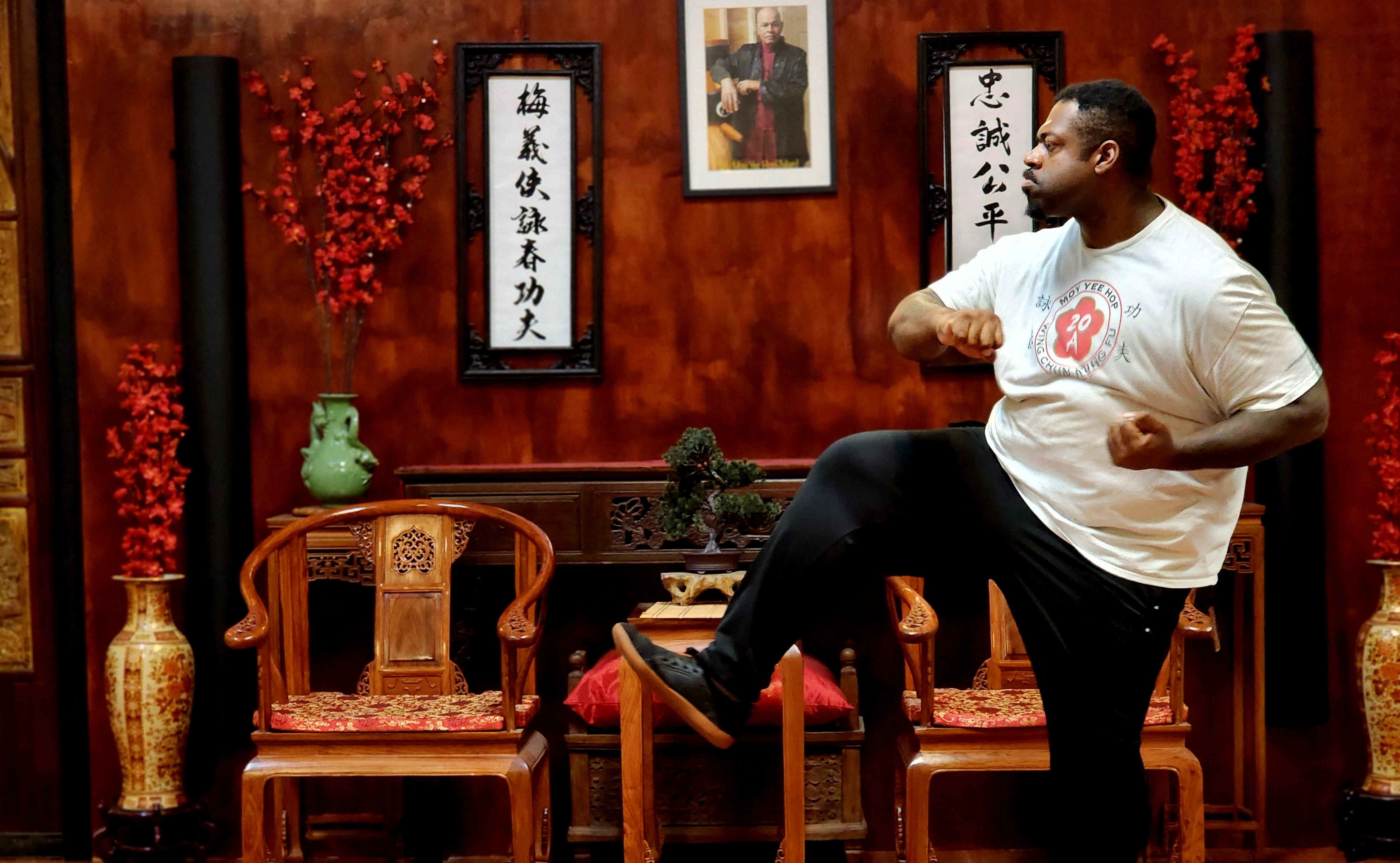
Moy Yee Hop Ving Tsun Kung Fu teaches the Moy Yat system as passed down through Grandmaster Julian Cordero. That commitment to pure transmission gives students a dependable path: learn the fundamentals correctly, develop them through structured practice, and continue growing through years of study. Tradition is not treated as decoration. It is the standard that guides instruction.
The Value of Chi Sao Training
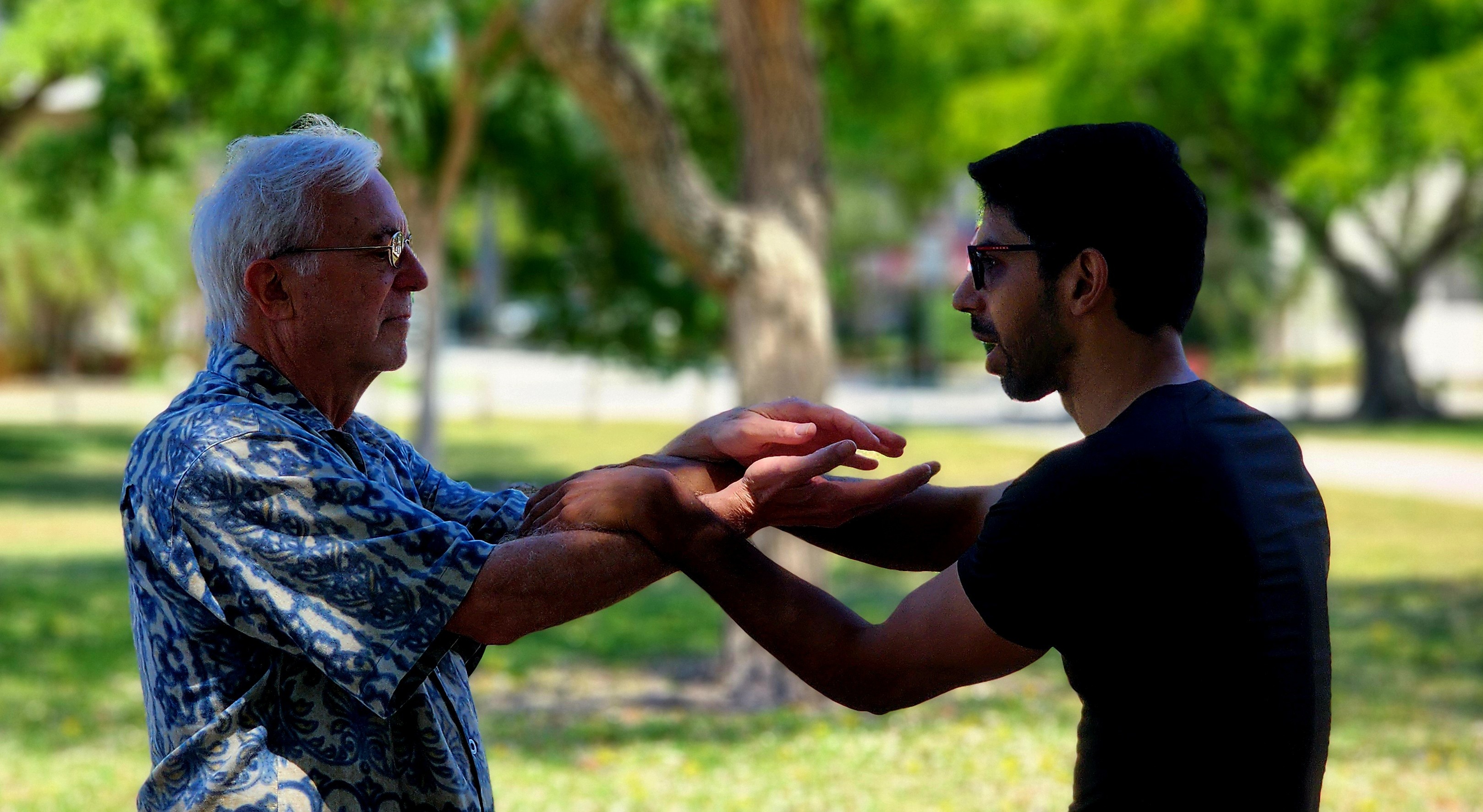
Students who explore Ving Tsun will often hear about Chi Sao, or sticking hands. It is a partner training method that develops sensitivity, reflexes, positioning, and the ability to recognize openings at close range. Chi Sao is not a dance and it is not magic. Its purpose is to help students feel changes in pressure and direction while maintaining structure and protecting the centerline.
For beginners, Chi Sao may seem difficult because it asks for relaxation and awareness at the same time. Trying to force every movement usually creates tension. With patient instruction, students learn that control often comes from correct position rather than brute strength. This is one reason Ving Tsun can remain a lifelong practice. The deeper a student goes, the more there is to refine.
Look for a School That Can Meet You Where You Are
A serious martial arts school should be demanding, but it should not be dismissive. New students arrive with different fitness levels, schedules, injuries, responsibilities, and reasons for training. The right environment has standards without making people feel excluded from the first class.
Adults often want a disciplined practice that provides a break from work and daily pressure. They may be looking to improve coordination, posture, focus, and confidence while learning skills that have practical value. Parents may want their children to develop respect, resilience, and the ability to listen and follow through. Women may seek a dedicated place to build personal safety skills in a focused, supportive setting. Veterans may value the structure, camaraderie, and steady progress that martial arts training can provide.
These goals are different, but they can exist under one roof when instruction is organized well. Ask whether the school offers classes appropriate to your age and experience. Find out how instructors handle new students. If private lessons, group classes, children's programs, women's training, or specialized workshops are available, consider which setting will help you train consistently.
Consistency is more valuable than occasional intensity. The best schedule is not the one that looks impressive on paper. It is the one you can realistically keep. A school near Jupiter, Port St. Lucie, Palm City, Vero Beach, or Fort Lauderdale may be a better long-term fit if class times and travel make regular attendance possible.
Questions Worth Asking Before Your First Class
A complimentary visit is an opportunity to observe, not just enroll. You do not need martial arts experience to recognize a healthy training culture. Listen for clear instruction. Watch whether senior students help newer classmates without acting superior. Notice whether instructors are attentive to safety, form, and individual progress.
Ask how the school teaches self-defense, how long beginners spend on fundamentals, and what advancement represents. A credible instructor will not pressure you with vague claims or guarantee a black belt by a certain date. They should be able to explain the training path in plain language.
Also ask yourself a more personal question: can you imagine returning after the excitement of the first class has passed? Martial arts change people through accumulated effort. The school should feel challenging enough to earn your respect and welcoming enough that you want to continue.
Training Is a Long-Term Investment
Kung Fu does not ask you to become perfect before you begin. It asks you to show up, pay attention, and improve one detail at a time. A stronger stance becomes better balance. Better balance supports more confident movement. More confident movement changes how you carry yourself outside the classroom.
The right school will honor that process. It will give you practical skills, experienced guidance, and training partners who become part of your Kung Fu family. Visit with an open mind, ask thoughtful questions, and choose the place where disciplined practice can become a lasting part of your life.
.jpg)
.jpg)