By clicking “Accept All Cookies”, you agree to the storing of cookies on your device to enhance site navigation, analyze site usage, and assist in our marketing efforts. View our Privacy Policy for more information.
What Is Centerline Theory in Ving Tsun?
What is centerline theory? Learn how this core Ving Tsun principle shapes structure, timing, defense, and practical self-defense training.
By
August 2, 2026
Related

A fight is often decided by inches. The person who controls the most direct path to the target usually has the advantage, not because they are stronger, but because they are more efficient. That is the heart of what is centerline theory in Ving Tsun - a principle that teaches you to protect your own central line while attacking your opponent’s.
For many people, centerline theory is one of the first ideas they hear about Wing Chun or Ving Tsun. It is also one of the most misunderstood. Some assume it is just about standing square. Others think it means always punching straight down the middle no matter what. In authentic training, it is much more complete than that. It shapes your stance, your hand position, your footwork, your timing, and your decision-making under pressure.
In the Ving Tsun Kung Fu system, centerline theory is not a slogan. It is a working principle that gives the art its directness and practical self-defense value.
What Is Centerline Theory?
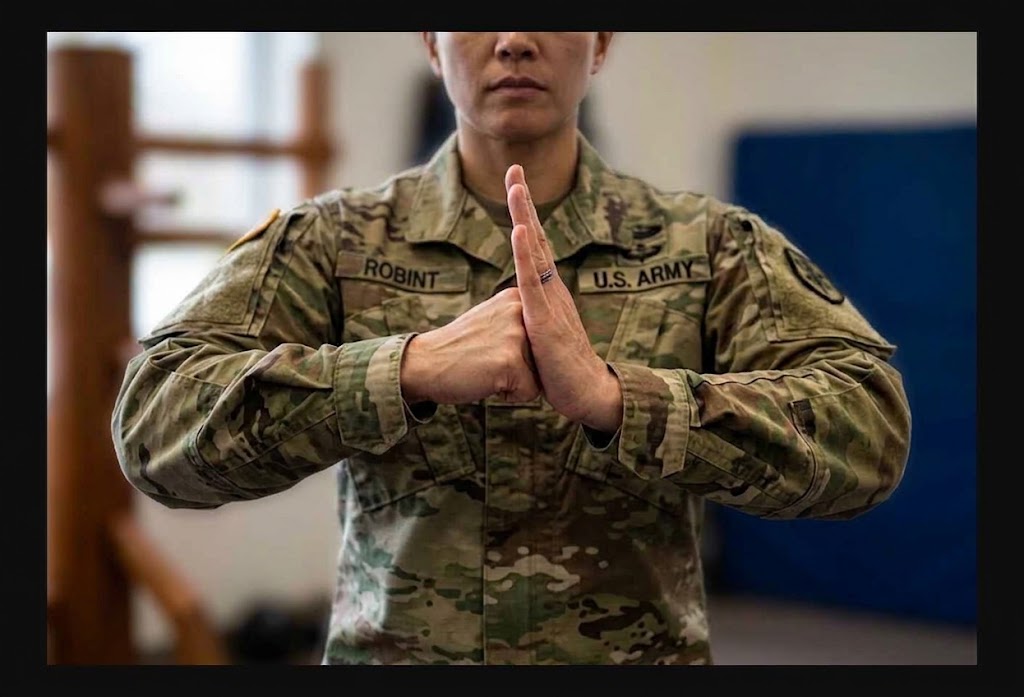
Centerline theory refers to the idea that the center of the body contains the most important targets and the most efficient path for both attack and defense. If you imagine a vertical line running down the middle of the body from the top of the head through the nose, throat, chest, solar plexus, and groin, you are looking at the body’s central axis.
In Ving Tsun, protecting that line matters because many of the most vulnerable targets are found there. At the same time, attacking along that line matters because the shortest distance between two points is a straight line. A straight punch reaches its goal faster than a wide swinging strike. A compact movement also tends to recover more quickly if it misses or meets resistance.
That does not mean every exchange happens perfectly on a fixed line. Real movement is dynamic. People shift angles, turn, step, and change distance. The principle still holds. Centerline theory teaches you to keep your structure aligned so you can defend and strike through the most efficient path available.
Why Centerline Theory Matters in Real Self-Defense
Under stress, fine choices disappear. People do not rise to the level of their wishes. They fall to the level of their training. A system built around simple, direct principles has a real advantage when speed and pressure increase.
Centerline theory matters because it reduces wasted motion. Instead of reaching, chasing hands, or loading up on big strikes, the practitioner learns to occupy the space that matters most. This supports faster reactions, stronger structure, and a more economical use of energy.
For adults balancing work, family, and training, that efficiency is one reason Ving Tsun remains so practical. You do not need flashy movement to be effective. You need correct position, timing, and intent. For women, mature beginners, and older adults, this principle is especially valuable because it does not depend on size or athleticism alone. It relies on positioning and mechanics.
There is also a defensive benefit that new students immediately feel. When your hands and body are trained to guard the center, you are less exposed during transitions. That does not make anyone invincible, but it does create a disciplined framework that improves your odds in close-range encounters.
How Centerline Theory Shapes Ving Tsun Technique
The easiest way to understand centerline theory is to see how it influences nearly every part of training.
Structure and stance
A proper Ving Tsun stance supports central protection and forward intention. The body is organized so the hands can travel efficiently, the elbows can stay connected, and the practitioner can generate force without overcommitting.
This is where many people make an early mistake. They hear “centerline” and become stiff or overly square. Good structure is alive, not frozen. The stance gives stability and readiness, but it must still allow turning, stepping, and adapting.
Elbow position
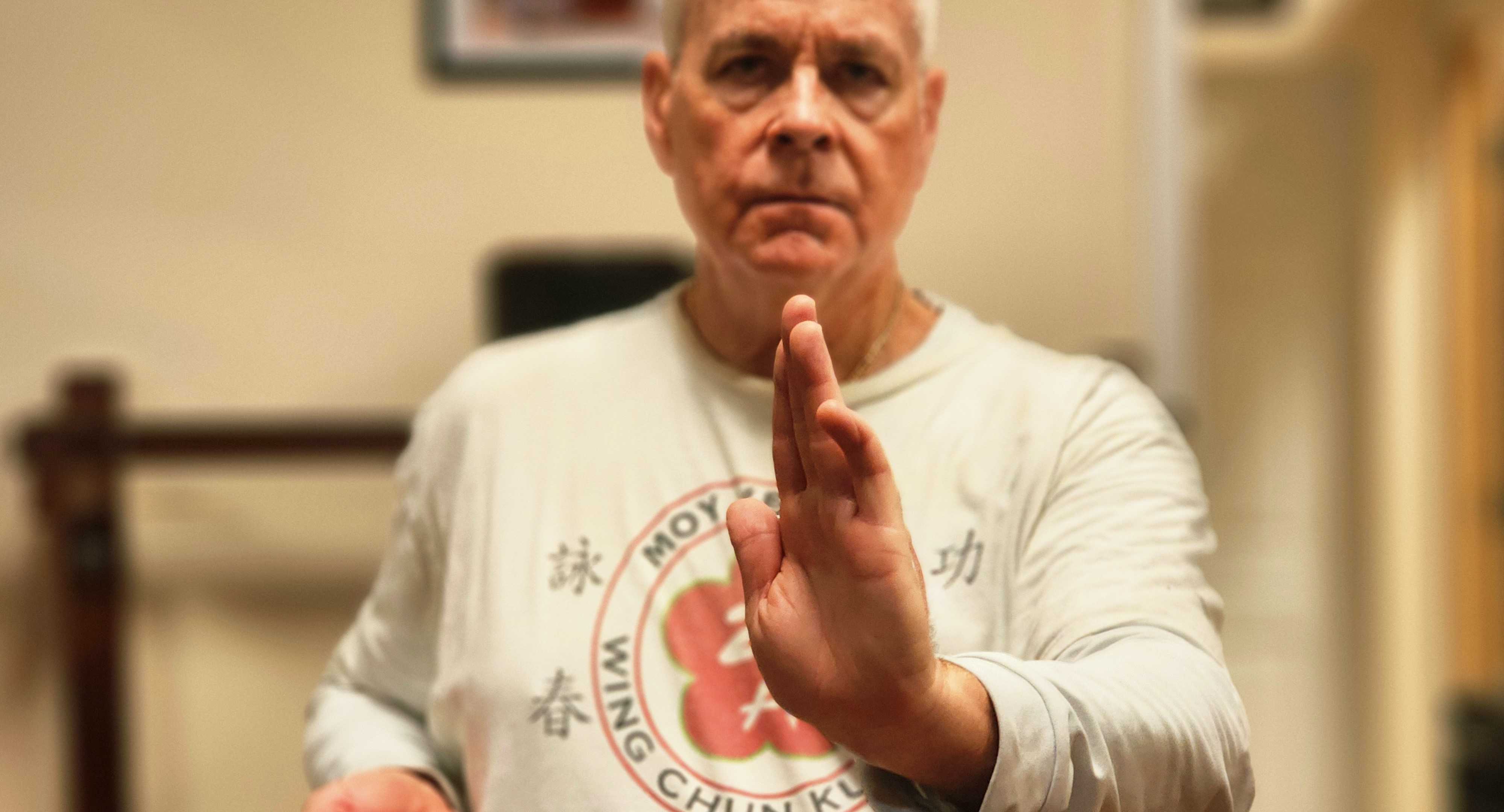
In classical Ving Tsun, the elbow is a major guardian of the centerline. If the elbow flares too far out, openings appear. If it collapses incorrectly, structure weakens. Proper elbow energy helps maintain a clear path for both defense and attack.
This is one reason the system can look compact to an outsider. The movements are not small for appearance. They are small because unnecessary motion creates delay and exposure.
Straight-line striking
The vertical punch is closely associated with centerline theory because it travels on a direct route to the target. It is fast, efficient, and easy to repeat with continuity when supported by correct body structure.
Still, direct does not mean careless. If a path is obstructed, the practitioner must adjust. Ving Tsun is not about forcing a straight line when the situation calls for an angle, a step, or a change in timing. The principle is economy, not rigidity.
Simultaneous attack and defense
One of the defining strengths of Ving Tsun is the idea that you do not always separate blocking and hitting into two different moments. When possible, the system aims to defend and attack together.
Centerline theory makes this possible. If your movement already occupies the most important line, your defensive action can also create an offensive path. This saves time, and in self-defense, time matters.
What Is Centerline Theory in Training, Not Just Theory?
A principle only has value if it can be trained. In Ving Tsun, centerline theory is developed through forms, drills, partner work, and controlled pressure.
Siu Nim Tao introduces essential positioning, alignment, and awareness. It teaches the student where the line is, how the arms relate to it, and how to build structure without rushing. This can seem simple at first, but it is foundational. Many advanced errors come from weak basics.
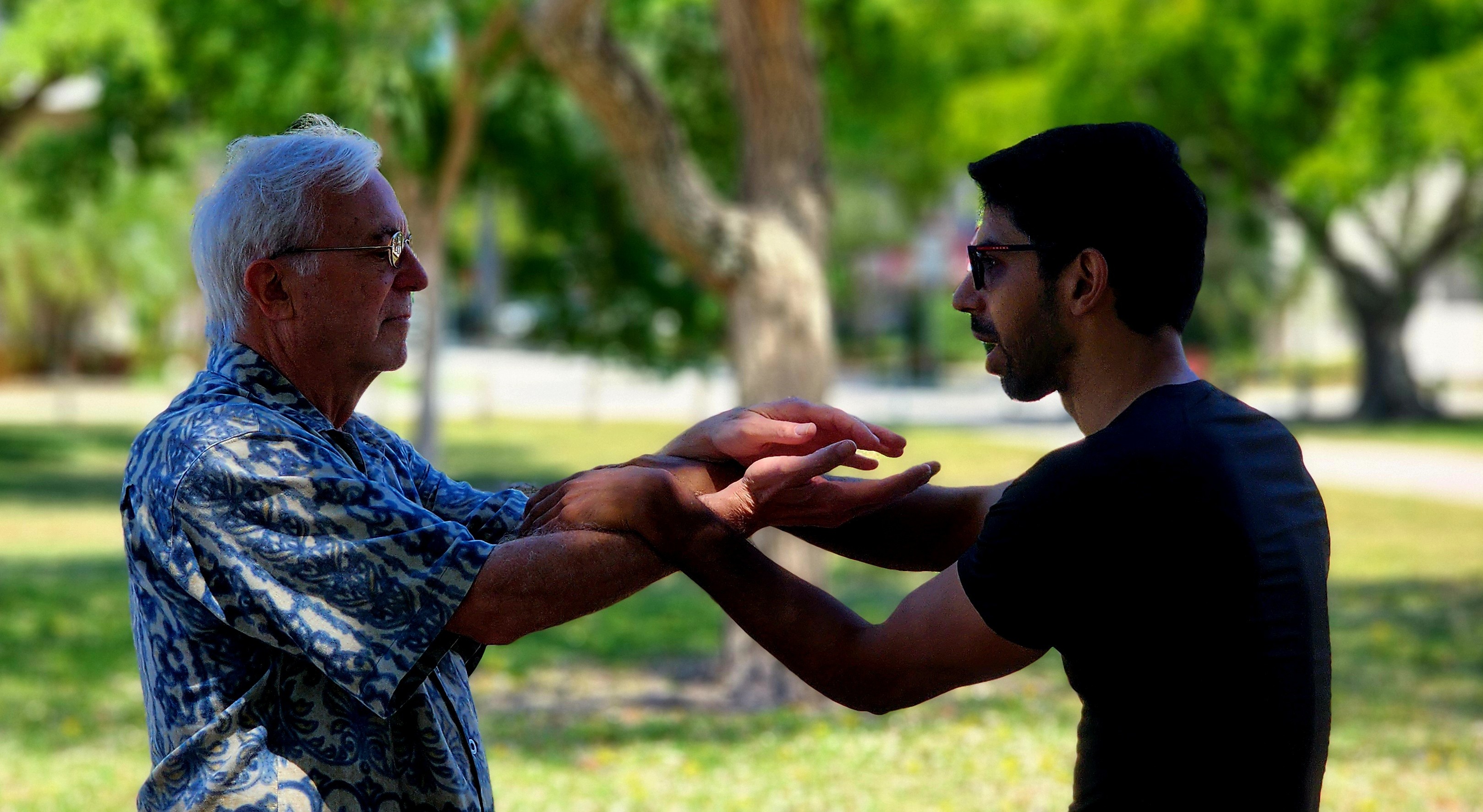
Dan Chi Sao and Chi Sao then help students feel centerline pressure in contact. This is where theory becomes alive. You begin to recognize when your line is exposed, when your opponent’s structure opens, and how timing changes in close range. Sensitivity training does not replace fighting skill, but it develops attributes that support practical response.
Footwork is another necessary piece. A student can understand centerline with the hands and still lose it with poor positioning. If your body is out of place, your hands often arrive late or work too hard. Good stepping and turning preserve the line while adjusting to movement.
This is why authentic instruction matters. Centerline theory can be described in a few sentences, but proper training takes correction, repetition, and supervision. Without that, students often imitate shapes without understanding function.
Common Misunderstandings About Centerline Theory
One common misunderstanding is that centerline theory means standing directly in front of someone at all times. In reality, Ving Tsun uses turning, angling, and stepping to manage pressure. The centerline is not an excuse to become stationary.
Another mistake is treating every attack as if the middle is always open. Skilled application depends on distance, timing, and what the opponent is giving you. Sometimes the best way to regain the center is by changing position first.
A third misunderstanding is believing centerline theory only applies to punching. It applies to defense, posture, balance, trapping concepts, and transitional movement. It is a framework for economy and control, not just a single striking idea.
There is also the trap of overconfidence. Students may hear that Ving Tsun is based on directness and assume that directness automatically wins. It does not. If your structure is poor, if your timing is off, or if you panic under pressure, theory alone will not save you. The principle works when it is trained honestly.
Why This Principle Still Matters Today
Some martial ideas become outdated because they depend too heavily on ritual or unrealistic assumptions. Centerline theory has endured because it is tied to something basic and human - the need to protect vital targets while taking the most efficient route to your objective.
That does not mean every confrontation looks like a textbook Ving Tsun exchange. Real situations are messy. People are unpredictable. Adrenaline changes everything. Even so, a practitioner who understands line, structure, and economy has a better foundation than someone relying on speed alone.
For students seeking more than exercise, this is where traditional training proves its value. A principle preserved through lineage is not preserved for nostalgia. It is preserved because it continues to work when taught correctly.
At Moy Yee Hop Ving Tsun Kung Fu, that commitment to authentic transmission matters because students deserve more than surface-level instruction. They deserve principles they can carry into training, self-defense, and daily life with confidence and discipline.
Centerline theory is not just about where you place your hands. It teaches you to value efficiency over force, clarity over panic, and structure over chaos. That lesson serves you well long after class ends.
.jpg)
.jpg)